Cooling gel pillows are becoming an important product category for pillow brands and bedding manufacturers looking to offer additional comfort and cooling features.
However, not every pillow manufacturer has foam molding equipment or gel production facilities.
For pillow cover manufacturers, textile factories, and sewing workshops, there is another practical way to develop cooling gel pillows: integrating fabric-backed gel sheets or finished gel inserts directly into pillow covers.
At Kunbao, we manufacture customizable cooling gel sheets, fabric-laminated gel materials, and finished gel inserts for OEM and ODM pillow production.
With gel manufacturing experience since 2011, we help customers develop cooling pillow products using different materials, backing structures, and assembly methods.
This guide explains how fabric-backed gel sheets work, how they can be incorporated into pillow covers, and which sewing and assembly options are suitable for different manufacturers.
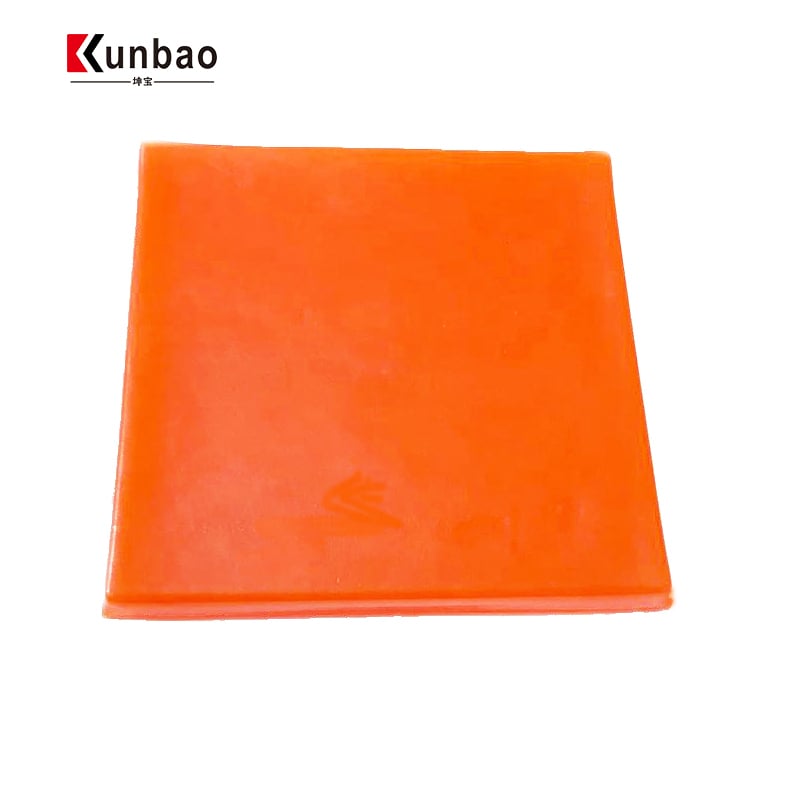
A fabric-backed cooling gel sheet is a composite material consisting of a flexible gel layer combined with a suitable fabric backing.
The gel layer provides the intended cooling and cushioning characteristics, while the fabric backing serves as a supporting layer for selected textile assembly processes.
Depending on the design, the gel surface may remain exposed or be combined with an additional suitable covering material.
Top Layer: Cooling Gel
A soft and flexible gel material designed for cooling comfort and cushioning.
Bottom Layer: Fabric Backing
A compatible textile material laminated to the gel layer.
The backing fabric may help improve handling and provide a suitable area for certain sewing or assembly methods.
The exact structure depends on the gel formulation, fabric type, lamination method, and finished product requirements.
Fabric-backed gel sheets can offer several practical advantages for pillow manufacturers:
Easier integration into selected pillow cover designs
Flexible customization of gel size and shape
Compatibility with certain sewing and textile assembly methods
Reduced need for foam molding equipment
Opportunities to develop removable cooling comfort components
Suitable for OEM and private-label pillow projects
Important: The fabric backing does not automatically make every gel sheet suitable for direct stitching. Sewing methods and stitch locations must be validated for the specific composite structure.
Kunbao supports different gel insert structures depending on the customer's manufacturing process.
In this method, pillow cover manufacturers purchase gel sheets with suitable fabric backing.
The gel composite is then incorporated into a specially designed pillow cover.
A typical production process includes:
Step 1: Select the Gel Sheet
Choose the required gel size, thickness, shape, hardness, and surface pattern.
Step 2: Select the Backing Fabric
Choose a suitable backing material according to the pillow cover construction and assembly method.
Step 3: Prepare the Pillow Cover
The sewing factory prepares the cover panels and determines the location of the gel component.
Step 4: Attach the Gel Composite
The gel component is attached through an approved sewing or assembly method.
Where necessary, stitching should be limited to designated fabric margins or reinforced areas rather than penetrating the functional gel layer.
Step 5: Complete the Pillow Cover
The remaining cover panels are assembled to create the finished cooling pillow cover.
Suitable for:
Pillow cover manufacturers
Textile sewing factories
Memory foam pillow brands
Latex pillow manufacturers
OEM bedding suppliers
Main Advantage: Manufacturers can integrate gel comfort materials into their existing textile production processes without manufacturing the gel themselves.
For customers who prefer a simpler assembly process, Kunbao can supply finished gel inserts with customized backing materials and finished edges.
Instead of sewing directly onto the gel composite, the manufacturer creates a dedicated compartment or pocket inside the pillow cover.
A typical production process includes:
Step 1: Order Finished Gel Inserts
Kunbao manufactures the gel inserts according to the approved size, shape, thickness, and edge structure.
Step 2: Prepare the Pillow Cover
The customer manufactures a pillow cover with a suitable internal pocket or compartment.
Step 3: Insert the Gel Component
The finished gel insert is placed inside the designated compartment.
Step 4: Complete the Product
The pillow cover is assembled and checked for fit, positioning, comfort, and stability.
Suitable for:
Pillow brands
OEM pillow assemblers
Sewing factories
Memory foam pillow manufacturers
Manufacturers of removable cooling pillow covers
Main Advantage: This approach can simplify assembly and reduce the need for additional processing of the gel material.
The pocket design should prevent unwanted movement, folding, or bunching during normal use.
Which option is more suitable for your factory?
| Feature | Fabric-Backed Gel Sheets | Finished Gel Inserts |
|---|---|---|
| Main Structure | Gel laminated with fabric backing | Gel component with finished edges |
| Customer Processing | Sewing or compatible textile assembly | Insertion into a cover compartment |
| Sewing Requirements | Depends on fabric margins and structure | Generally no stitching through the gel insert |
| Design Flexibility | Suitable for customized textile integration | Suitable for removable or enclosed components |
| Assembly Complexity | Depends on sewing design | Often simpler |
| Typical Customers | Pillow cover and sewing factories | Pillow brands and OEM assemblers |
Neither option is universally better.
The correct choice depends on the factory's existing equipment, product design, desired appearance, production volume, and cost requirements.
Different fabrics offer different levels of stretch, flexibility, surface feel, and compatibility with gel materials.
Kunbao can evaluate suitable fabric options according to the customer's product requirements.
Stretch fabrics may be suitable for pillow covers that require flexibility and conformity to curved surfaces.
They can be considered for selected gel composite structures, subject to lamination compatibility.
Cooling-touch fabrics may be combined with gel materials to create a differentiated cooling pillow cover.
However, the cooling sensation of the finished product depends on both the textile and the gel structure.
Selected elastic fabrics commonly used in stretch textile products may provide flexibility for customized gel composites.
The exact material should be evaluated for adhesion, stretch recovery, and sewing performance.
Depending on the intended application, other compatible textile materials may also be considered.
What should manufacturers check?
Fabric stretch and recovery
Gel-to-fabric adhesion
Sewing compatibility
Surface comfort
Material thickness
Cleaning requirements
Durability of the finished composite
Not every fabric is suitable for every gel formulation.
Sample testing is recommended before mass production.
This is one of the most important questions for pillow cover manufacturers.
The answer depends on the structure of the gel sheet.
Sewing directly through a functional gel layer may damage the material, weaken the composite, or create potential leakage or durability problems in certain gel structures.
For this reason, manufacturers should not assume that an ordinary sewing machine can stitch through any gel sheet.
Use Designated Sewing Margins
Where possible, design the composite with suitable fabric margins or reinforced attachment areas.
Avoid Unnecessary Gel Penetration
Stitching through the gel itself should only be considered when the specific structure has been designed and validated for that purpose.
Consider Finished Gel Inserts
If direct sewing is unsuitable, a finished gel insert placed inside a pillow cover compartment may be a better solution.
Test the Complete Pillow Cover
Check the finished product for:
Stitching integrity
Gel positioning
Bending and folding performance
Edge durability
Material separation
User comfort
Cleaning and care compatibility
Kunbao can help customers evaluate suitable gel backing and edge structures according to their assembly requirements.
Different pillow covers require different gel dimensions and structures.
Kunbao offers customization options including:
Gel length and width
Custom shapes and outlines
Gel thickness
Gel hardness and elasticity
Gel colors
Surface patterns
Fabric backing materials
Protective film structures
Finished edges
OEM and ODM mold development
These cover a larger portion of the pillow surface and may be suitable for designs requiring a broad gel contact area.
These use smaller gel components in selected areas and may help control material usage and cost.
Customized outlines can be developed for ergonomic or curved pillow designs.
Depending on the material combination, suitable edge-finishing or sealing methods can be evaluated.
The final design should be confirmed through samples before mass production.
Kunbao offers different gel material options.
PU gel can provide soft and flexible cushioning characteristics.
Depending on the formulation, it can be combined with suitable fabrics or other backing materials for selected pillow cover applications.
Hydrogel contains water and may provide a stronger initial cooling sensation than certain conventional PU gel formulations.
However, hydrogel structures require additional attention to:
Moisture retention
Surface protection
Film compatibility
Edge sealing
Temperature resistance
Long-term stability
For hydrogel inserts, puncture resistance and sealing integrity are especially important when designing a pillow cover assembly.
The choice between PU gel and hydrogel should be based on the intended product structure and validated performance requirements.
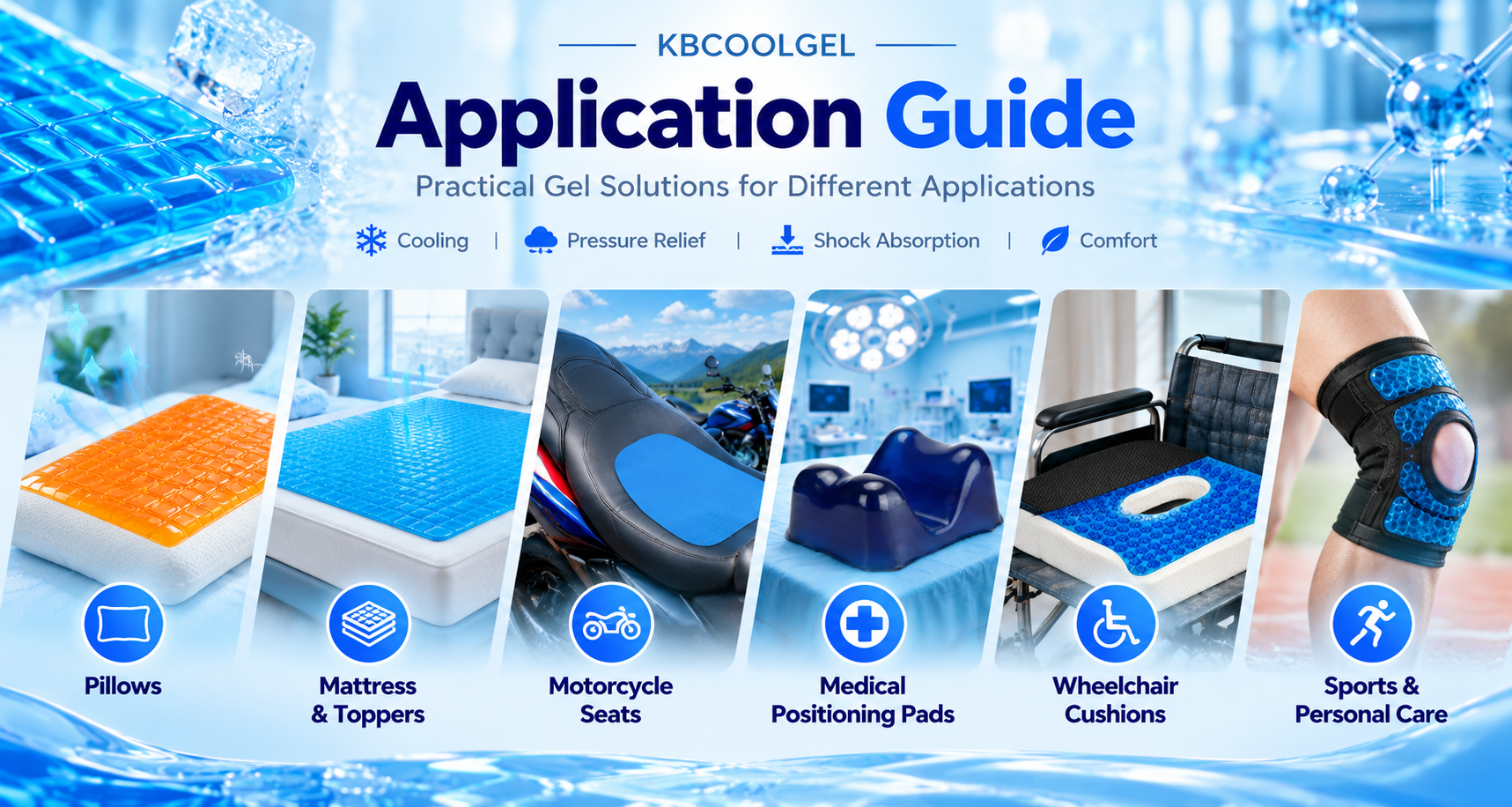
Memory foam manufacturers can develop cooling pillow covers with integrated fabric-backed gel or finished gel inserts.
This approach may allow them to introduce a cooling feature without modifying the foam core.
Latex pillow manufacturers can consider gel components integrated into removable or specially designed covers.
The gel structure should be evaluated for compatibility with the pillow shape and cover design.
Factories producing fiber-filled, down, buckwheat, or other conventional pillows may use suitable gel inserts in dedicated cover compartments.
This allows them to develop cooling pillow products without changing the original filling material.
Textile factories can purchase pre-manufactured gel components and incorporate them into customized pillow covers.
This creates an opportunity to offer value-added cooling pillow covers to existing customers.
Brands can work with OEM manufacturers to develop finished pillow products using customized gel insert structures.
Before placing a large order, pillow manufacturers should confirm the following specifications:
Gel Material
PU gel, hydrogel, or another approved formulation.
Gel Dimensions
Length, width, thickness, and shape.
Backing Fabric
Fabric type, stretch characteristics, and lamination requirements.
Sewing or Assembly Method
Sewn attachment, reinforced fabric margins, or insertion into a dedicated compartment.
Edge Structure
Unfinished, fabric-bordered, or suitably finished and sealed edges.
Sample Approval
Confirm appearance, fit, flexibility, cooling comfort, and assembly compatibility.
Quality Requirements
Agree on the relevant dimensional tolerances, material characteristics, and inspection criteria.
Testing Requirements
Confirm applicable material documentation and any required durability or performance testing.
A properly approved sample helps reduce production issues and supports more consistent repeat orders.
Kunbao is a custom gel material manufacturer with experience dating back to 2011.
We work with pillow manufacturers, bedding brands, and OEM customers to develop suitable gel material solutions.
Our capabilities include:
Over 15 years of gel manufacturing experience
More than ten gel formulations
Different raw material grades
More than 400 existing molds
Custom gel size, shape, hardness, and thickness
PU gel and hydrogel options
Fabric-backed gel sheet development
Film-laminated gel materials
Customized finished gel inserts
Edge-finishing and composite development
Free mold development for eligible OEM projects
Sample development and mass production support
We provide both semi-finished gel materials and customized finished components to meet different manufacturing requirements.
Our goal is to help customers integrate gel materials into their existing products and production processes.
Yes, when the composite has been designed for a suitable sewing or attachment method. Stitching through the functional gel layer should not be assumed safe without validation.
Yes. Kunbao offers customized fabric-backed gel sheets for selected pillow manufacturing applications.
Yes. We can develop finished gel inserts for placement inside compatible pillow cover compartments.
Yes. Suitable backing fabrics can be evaluated according to the customer's material and manufacturing requirements.
They can be used in selected pillow cover constructions for both types. Final suitability depends on the pillow design and assembly method.
Yes. Kunbao supports customized gel dimensions, outlines, hardness, thickness, colors, and patterns.
Yes. We have an extensive existing mold collection and offer custom mold development for OEM and ODM projects.
Whether you manufacture memory foam pillows, latex pillows, conventional pillows, or removable pillow covers, Kunbao can provide suitable cooling gel material solutions.
Choose fabric-backed gel sheets for compatible textile integration or finished gel inserts for direct assembly into specially designed pillow covers.
Looking for cooling gel materials for your pillow cover production?
Send us your pillow cover design, required gel dimensions, preferred backing fabric, and intended sewing or assembly method.
Our team can help you evaluate suitable gel materials and develop custom samples.
REQUEST FABRIC-BACKED GEL SAMPLES | DISCUSS YOUR OEM PROJECT
Kunbao — Custom Gel Materials & Solutions Manufacturer Since 2011
Website: www.kbcoolgel.com
 Hot News
2026-08-20
2026-09-08
2026-10-06
2026-09-09
2026-10-11
2026-10-05


 EN