A Step-by-Step Guide to Adhesive Selection, Surface Preparation and OEM Gel Pillow Manufacturing
Bonding cooling gel sheets to memory foam is a practical manufacturing method for producing cooling gel memory foam pillows.
Instead of incorporating gel during the foam molding process, manufacturers can attach a cooling gel sheet directly to an existing memory foam pillow surface using a suitable adhesive system.
This approach allows pillow factories to develop cooling gel products without necessarily changing their original foam molds or production equipment.
However, successful bonding depends on several factors, including the gel formulation, backing material, adhesive compatibility, foam surface, and production conditions.
So, what is the best way to bond cooling gel sheets to memory foam?
At Kunbao, we manufacture customizable PU gel sheets, hydrogel sheets, and gel composite materials for OEM pillow manufacturers.
In this guide, we explain the bonding process, adhesive selection, common manufacturing problems, and how to choose suitable gel sheets for memory foam applications.
Yes. Suitable cooling gel sheets can be bonded to memory foam using compatible adhesive systems.
One commonly considered option is a water-based polyurethane adhesive, also known as a water-based PU adhesive.
However, not every gel sheet or adhesive is suitable for direct bonding.
The actual bonding performance depends on:
Gel formulation
Gel backing structure
Memory foam surface properties
Adhesive type
Application amount
Drying and curing conditions
Gel thickness and flexibility
Intended product use
For example, a PU gel sheet designed for surface bonding may behave differently from a hydrogel sheet enclosed within a protective film.
Before mass production, manufacturers should test the actual gel, adhesive, and foam combination.
The main materials and equipment used in a typical gel-to-memory-foam bonding process include:
The gel sheets should have suitable dimensions, thickness, hardness, and surface characteristics.
Depending on the project, they may include:
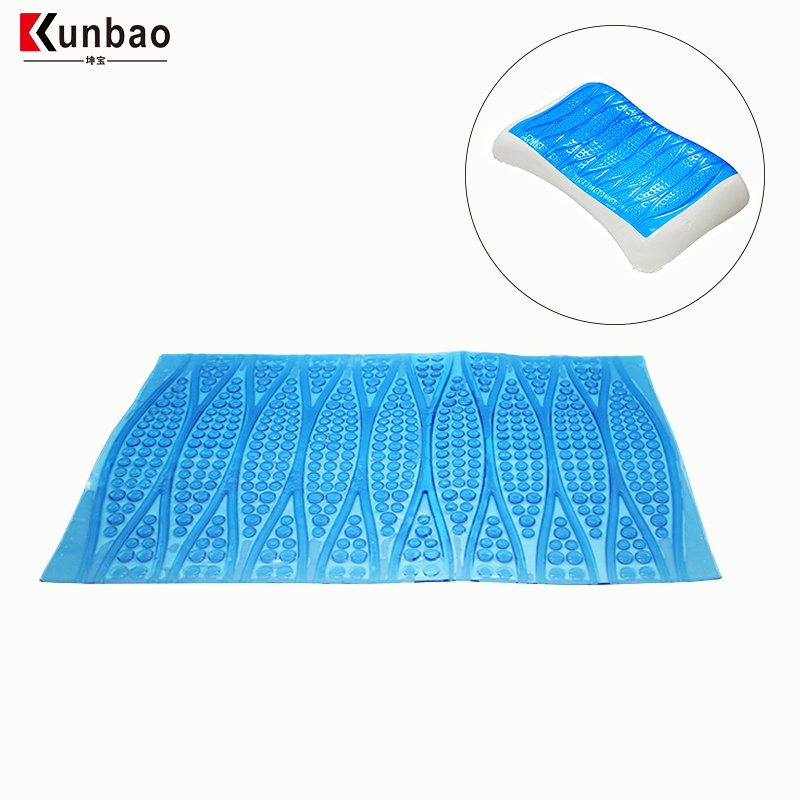
PU gel sheets
Gel sheets with a bondable backing
Fabric-backed gel sheets
Film-laminated gel sheets
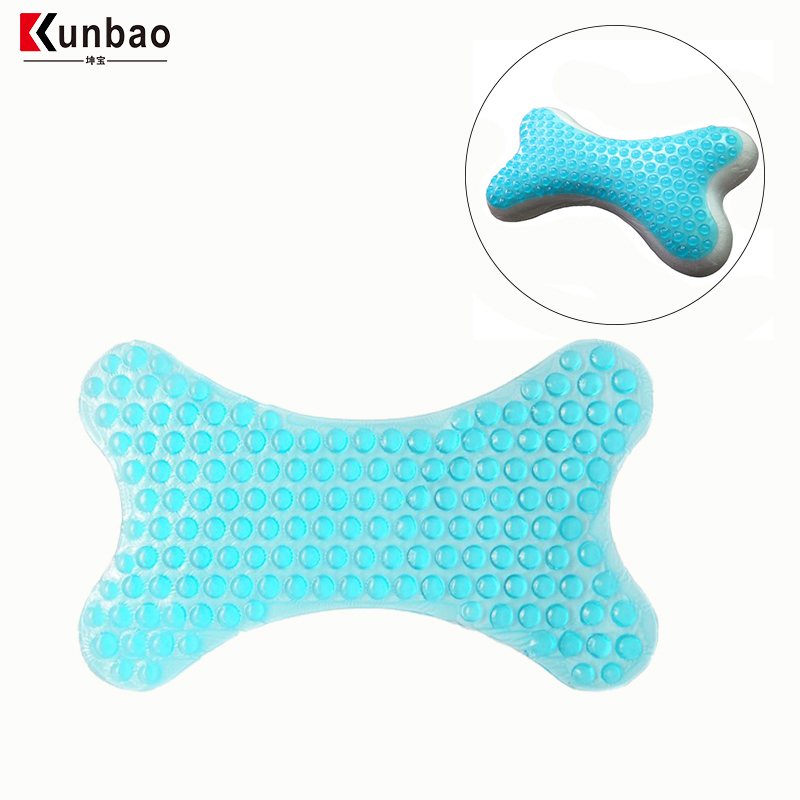
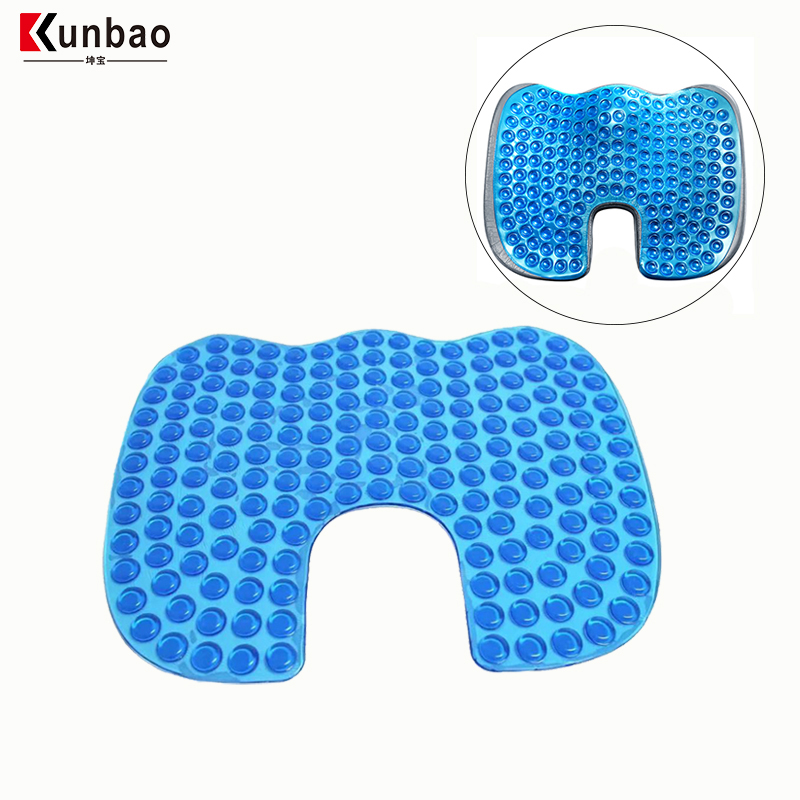
Customized gel inserts
The correct backing structure should be selected according to the adhesive and manufacturing method.
The memory foam should be properly cured, clean, and suitable for bonding.
Surface contamination, residual processing chemicals, or unsuitable foam conditions can affect adhesion.
A suitable adhesive system is required to bond the gel component to the foam.
Water-based PU adhesive is one option commonly evaluated for flexible foam bonding applications.
However, compatibility with the exact gel surface or backing material must be verified.
Depending on the production scale, manufacturers may use:
Spray application equipment
Roller coating equipment
Suitable adhesive application tools
Positioning fixtures
Gentle pressing equipment
Drying or curing areas
The equipment should match the adhesive manufacturer's recommended application process.
The following describes a general manufacturing workflow.
Actual adhesive quantities, drying times, temperatures, and pressing conditions must be determined through trials using the selected materials.
Start with a finished memory foam pillow core.
Make sure the foam has completed the required curing process.
The surface should be clean and free from dust, oil, loose particles, and other contamination.
Inspect the foam for irregularities that may affect contact with the gel sheet.
A smooth and consistent bonding area generally helps achieve a more uniform assembly.
Select the cooling gel sheet according to the pillow design.
Check:
Length and width
Thickness
Hardness
Surface pattern
Backing material
Overall flexibility
Appearance and dimensional consistency
If the gel sheet has release paper covering an adhesive-compatible surface, remove it according to the product instructions before bonding.
Important: Not every backing layer should be removed.
Some gel sheets have permanent fabric or protective film layers that are part of the finished product structure.
Removing these layers may damage the material.
Choose an adhesive compatible with both the foam and the intended bonding surface of the gel sheet.
For selected PU gel and memory foam applications, a suitable water-based PU adhesive may be considered.
Before full production, conduct small-scale trials to confirm:
Initial adhesion
Final bond strength
Flexibility after curing
Compatibility with the gel
Compatibility with the foam
Appearance after bonding
Resistance to edge lifting
Performance after repeated compression
Do not assume that an adhesive suitable for foam-to-foam bonding will automatically bond well to every gel formulation or protective film.
Apply the adhesive according to the supplier's technical instructions.
Depending on the system, the adhesive may be applied to the memory foam surface, the gel backing, or both surfaces.
The appropriate method depends on the adhesive formulation and the materials being bonded.
Aim for a consistent application without excessive adhesive buildup.
Uneven application can cause weak bonding areas, surface irregularities, or visible defects.
Excessive adhesive may also affect the pillow's flexibility and overall comfort.
Some water-based adhesive systems require a defined drying or open time before the surfaces are joined.
The correct timing depends on the adhesive, coating weight, temperature, humidity, and substrate properties.
Follow the adhesive manufacturer's instructions.
Joining the materials too early or too late may reduce bond quality.
Carefully align the cooling gel sheet with the memory foam pillow.
Start from one side and gradually place the gel sheet onto the prepared bonding surface.
Avoid excessive stretching, twisting, or pulling.
For contoured pillows, ensure that the gel sheet conforms to the intended surface without creating unnecessary tension.
Accurate positioning helps maintain a consistent finished appearance.
After positioning, apply suitable pressure to establish contact between the bonded surfaces.
The pressure should be sufficient for the adhesive system without damaging the gel or deforming the foam.
Avoid excessive compression, particularly when using soft gel sheets or patterned gel structures.
The correct pressure and duration should be established during sample development.
Place the bonded pillow in the recommended curing environment.
Follow the adhesive manufacturer's instructions for temperature, ventilation, and curing time.
Do not proceed to final packaging before the adhesive has reached the required condition.
Insufficient curing may contribute to weak adhesion, residual moisture, or other quality problems.
After curing, inspect the finished assembly.
Check for:
Correct gel positioning
Uniform appearance
Edge lifting
Air pockets
Wrinkles
Adhesive residue
Foam deformation
Bonding consistency
Surface comfort
Only approved samples should proceed to mass production.
There is no single adhesive that is best for every gel and foam combination.
Adhesive selection depends on the gel formulation and the bonding surface.
Water-based polyurethane adhesives are often considered for flexible foam bonding applications.
Potential advantages may include:
Flexible bonding options
Compatibility with selected foam materials
Different application methods
Formulations suitable for certain low-solvent manufacturing processes
However, the exact adhesive must be evaluated for the selected gel material.
Water-based does not automatically mean VOC-free, non-toxic, or suitable for every pillow application.
Other adhesive technologies may also be considered depending on the substrate and manufacturing requirements.
These may include selected hot-melt or pressure-sensitive adhesive systems.
However, temperature exposure, adhesive migration, flexibility, and material compatibility must be evaluated.
For cooling gel pillow manufacturing, the goal is not simply to achieve strong adhesion.
The finished structure should also maintain suitable softness, flexibility, appearance, and comfort.
Yes. The gel backing structure is one of the most important factors in adhesive selection.
Different backing materials can require different bonding methods.
Some PU gel sheets are supplied with release paper on the bottom.
Depending on the formulation and product design, the release paper is removed before the gel is integrated into the customer's product.
The exposed bonding surface must be evaluated for compatibility with the selected adhesive or assembly method.
A fabric-backed gel sheet has a textile layer laminated to one side.
For some adhesive systems, bonding to a suitable fabric backing may be more practical than bonding directly to certain gel surfaces.
However, the fabric-to-gel lamination must also be strong enough for the intended application.
Gel sheets may incorporate TPU, PVC, EVA, or other protective films.
These films have different surface properties.
An adhesive that bonds well to fabric may not provide the same performance on a smooth polymer film.
Additional surface treatment or a different adhesive may be required.
Hydrogel materials may use protective films or specialized backing structures.
Manufacturers should not assume that a conventional PU gel bonding method is suitable for hydrogel.
The hydrogel formulation, protective film, moisture stability, and adhesive compatibility should be evaluated together.
For OEM pillow manufacturers, selecting the right backing material can be just as important as selecting the gel itself.
Contoured memory foam pillows often have curved or irregular surfaces.
This makes gel bonding more challenging than bonding to a flat foam surface.
The gel should have sufficient flexibility to follow the pillow's contours.
Thicker gel sheets may be more difficult to conform to tight curves.
The most suitable thickness should be selected through sample testing.
A customized gel shape may reduce unnecessary stretching and wrinkling.
Fixtures can help maintain consistent gel placement during production.
Curved surfaces can create tension around the edges.
Manufacturers should check for edge lifting after bonding and repeated compression.
For highly contoured pillows, custom gel molds or specially designed gel patterns may provide a better solution than forcing a flat gel sheet onto the surface.
Possible causes:
Incompatible adhesive
Contaminated surface
Incorrect adhesive application
Insufficient curing
Excessive tension at the edges
Possible solutions:
Review the adhesive system, improve surface preparation, and conduct controlled bonding trials.
Possible causes:
Uneven positioning
Inconsistent adhesive application
Incomplete surface contact
Irregular foam surface
Possible solutions:
Improve alignment, application consistency, and the pressing process.
Possible causes:
Incorrect gel dimensions
Excessive stretching
Gel too thick or stiff for the pillow contour
Poor positioning
Possible solutions:
Adjust the gel shape, hardness, thickness, or positioning method.
Possible causes:
Excessive adhesive
Unsuitable adhesive stiffness
Uneven coating
Possible solutions:
Evaluate a more suitable flexible adhesive system and optimize the application amount.
Possible causes:
Material incompatibility
Chemical interaction
Temperature exposure
Changes in the gel or backing structure
Possible solutions:
Stop the trial, inspect the materials, and evaluate alternative formulations or bonding structures.
Possible causes:
Variation in adhesive application
Different foam surface conditions
Inconsistent curing
Material batch variation
Possible solutions:
Establish documented production parameters and incoming material inspection procedures.
Hydrogel can be considered for cooling pillow applications, but direct bonding requires careful evaluation.
Unlike certain conventional PU gel structures, hydrogel may have different surface characteristics and moisture-related considerations.
For some hydrogel products, bonding through a suitable protective film or fabric backing may be preferable to bonding directly to the gel material.
Manufacturers should evaluate:
Hydrogel formulation
Film or fabric backing
Adhesive compatibility
Moisture retention
Edge sealing
Temperature resistance
Long-term material stability
The final bonding structure should be confirmed through actual sample testing.
Pillow manufacturers can develop gel memory foam pillows using different methods.
Two common approaches are post-molding bonding and in-mold integration.
| Feature | Surface Bonding | In-Mold Integration |
|---|---|---|
| Production stage | After foam molding | During foam molding |
| Gel application | Attached to finished foam | Positioned in mold |
| Existing foam mold | May be retained | May require process validation or modification |
| Adhesive | Usually requires a compatible bonding system | Depends on the integration structure |
| Main consideration | Adhesion and surface conformity | Gel and foam process compatibility |
| Suitable application | Existing memory foam pillow production | Selected custom molded pillow projects |
Neither method is automatically better.
The appropriate choice depends on the pillow design, production equipment, gel formulation, and target manufacturing cost.
Before confirming a production order, manufacturers should establish a consistent evaluation process.
Check whether the gel adheres properly after the required curing period.
Evaluate bond strength using a suitable method agreed upon for the actual materials.
Apply representative repeated compression to assess whether the gel remains securely attached.
Evaluate the bonded structure under relevant storage and transportation conditions.
Check for wrinkles, bubbles, edge lifting, and visible adhesive defects.
Confirm that the adhesive and backing structure do not unacceptably affect the intended cooling characteristics.
Test the complete pillow structure rather than relying only on the individual gel sheet or adhesive specifications.
The test methods and acceptance criteria should be agreed upon before mass production.
For OEM pillow manufacturers, bonding costs depend on more than the price of the gel sheet.
Important factors include:
Gel material cost
Gel dimensions
Gel thickness
Adhesive consumption
Labor requirements
Production efficiency
Rework and defect rates
Packaging and handling
Several approaches may help optimize production.
Avoid unnecessary material thickness when it does not contribute to the target product performance.
Not every pillow requires full-surface gel coverage.
A customized gel insert may be suitable for selected contact areas.
A compatible backing can simplify the assembly process and reduce bonding problems.
Gel sheets designed to match the pillow contour may reduce trimming and positioning work.
Sample testing can help identify bonding problems before large quantities are produced.
The most cost-effective solution should be evaluated based on total production cost and finished product quality.
Kunbao is a custom gel material manufacturer serving memory foam pillow factories, bedding manufacturers, and OEM customers.
Since 2011, we have developed gel materials for cooling, cushioning, and comfort applications.
Our capabilities include:
More than 15 years of gel manufacturing experience
More than ten gel formulations
Different raw material grades
PU gel and hydrogel options
Custom gel hardness and thickness
Custom sizes, shapes, colors, and surface patterns
More than 400 existing molds
Gel sheets with selected backing structures
Fabric-backed and film-laminated gel sheets
Gel and foam composite development
Free mold development for eligible OEM projects
Sample development and mass production support
Different pillow factories use different bonding processes.
We can help customers evaluate suitable gel formulations and backing materials according to their manufacturing requirements.
For new projects, we recommend testing the selected gel sheet together with the customer's actual foam and adhesive before confirming mass production.
A suitable water-based PU adhesive is one option. However, the adhesive must be compatible with the specific gel surface or backing and the memory foam.
Yes, for compatible material combinations. Direct bonding should be verified through sample trials and durability testing.
If the release paper is a removable liner covering the intended bonding surface, it is generally removed according to the product instructions. Permanent protective films or fabric backing should not be removed without approval.
Certain hydrogel structures may be integrated using suitable backing materials and compatible adhesives. Direct bonding should not be assumed suitable for every hydrogel formulation.
Possible reasons include adhesive incompatibility, poor surface preparation, incorrect application, insufficient curing, or excessive mechanical stress.
Yes, when the gel flexibility, thickness, shape, and bonding process are suitable for the pillow's contours.
No. Compatibility depends on the gel formulation, backing structure, foam surface, and adhesive system.
Yes. Kunbao supplies customizable gel sheets with different sizes, shapes, thicknesses, hardness levels, and selected backing materials.
Bonding cooling gel sheets to memory foam is a practical way to manufacture cooling gel pillows without necessarily changing the original foam molding process.
However, successful production requires more than simply applying glue.
The gel formulation, backing structure, adhesive, foam surface, and curing process must work together.
For pillow manufacturers, selecting suitable gel materials and validating the bonding process before mass production can help improve consistency and reduce production problems.
At Kunbao, we manufacture customized PU gel sheets, hydrogel sheets, and gel composite materials for OEM pillow production.
Looking for cooling gel sheets suitable for memory foam bonding?
Share your pillow dimensions, gel thickness, foam type, bonding method, and preferred backing material.
Our team can help you evaluate suitable gel options and develop samples for your project.
REQUEST CUSTOM GEL SAMPLES | DISCUSS YOUR OEM PILLOW PROJECT
Kunbao — Custom Gel Materials & Solutions Manufacturer Since 2011
Website: www.kbcoolgel.com
 Hot News
2026-08-20
2026-09-08
2026-10-06
2026-09-09
2026-10-11
2026-10-05


 EN