A Complete Guide to Cooling Gel Pillows, Materials, Benefits and OEM Manufacturing
A gel pillow is a pillow that incorporates gel materials to provide cooling comfort, cushioning, or a combination of both.
Unlike traditional pillows made entirely from memory foam, latex, or fiber filling, gel pillows contain an additional gel component or gel-infused material designed to modify the pillow's comfort characteristics.
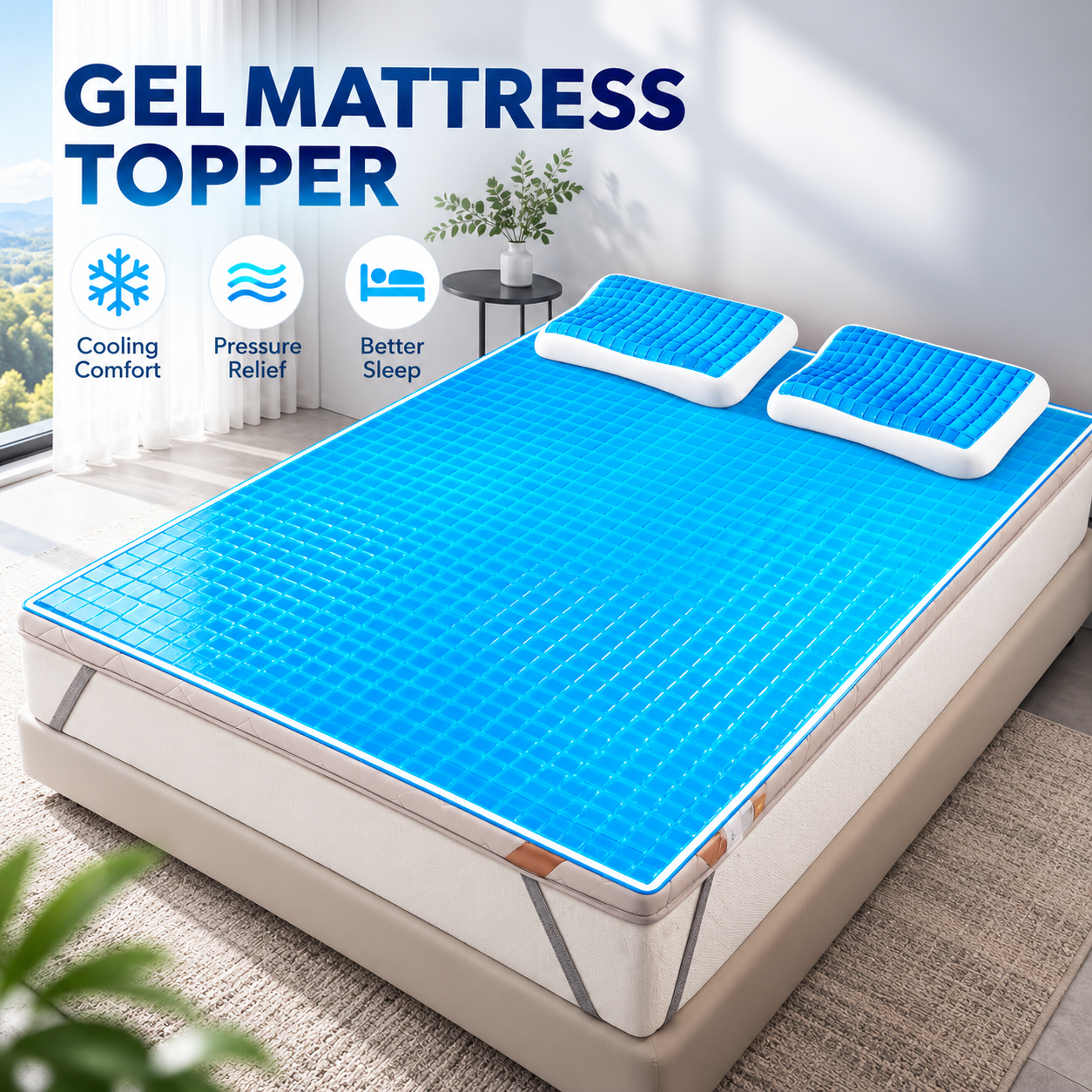
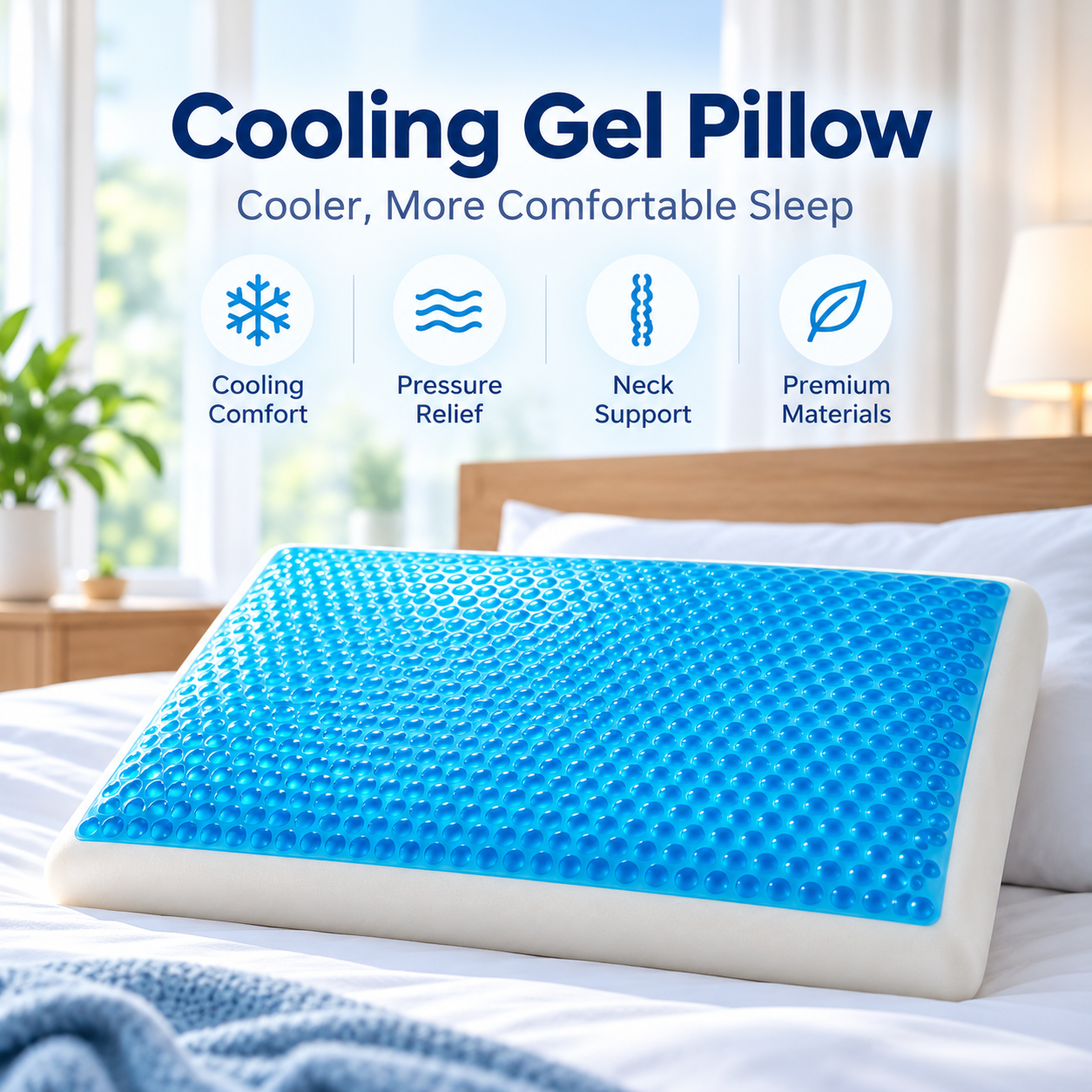
Cooling gel pillows are available in different structures. Some use a solid gel sheet on the pillow surface, while others contain gel particles or gel-infused foam. Certain designs also incorporate removable gel inserts inside the pillow cover.
But what exactly is a gel pillow, how does it work, and what types of gel materials are used in manufacturing?
In this guide, we explain the different gel pillow constructions, cooling principles, material options, and considerations for pillow manufacturers.
A gel pillow is not necessarily made entirely from gel.
In most designs, gel is combined with other cushioning materials such as memory foam, latex, or conventional pillow fillings.
The gel component may be incorporated in several ways.
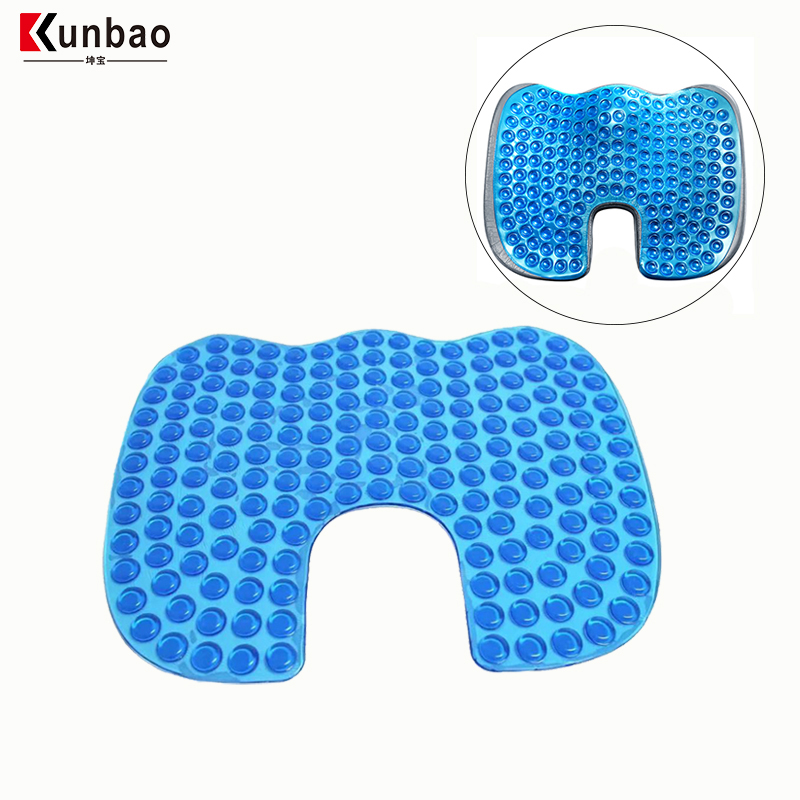
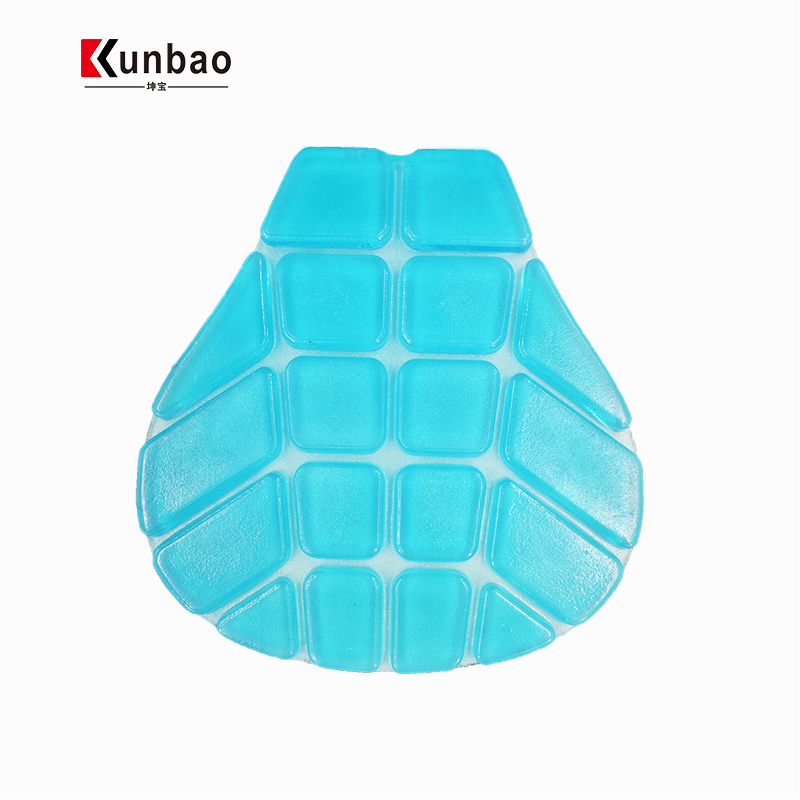
A cooling gel sheet is a flexible gel layer placed on or integrated into a pillow.
Depending on its formulation and design, the gel sheet can provide an initial cooling sensation and additional cushioning.
Gel sheets can be manufactured in different sizes, shapes, thicknesses, colors, and hardness levels.
Gel-infused memory foam contains gel particles, powder, or other gel additives distributed within the foam.
Unlike a separate gel sheet, the gel material is incorporated into the foam during manufacturing.
The actual cooling performance depends on the foam formulation, gel additive, pillow structure, and testing conditions.
Gel inserts are separate components that can be incorporated into pillow covers or assembled with foam structures.
They may include fabric backing, protective films, or customized edge finishing.
This option is particularly useful for manufacturers that want to add gel materials without changing their existing foam formulation.
Cooling gel pillows generally work through heat transfer.
When a person's head contacts the pillow, heat moves from the warmer skin toward the cooler pillow materials.
Some gel formulations can absorb and redistribute heat more effectively than certain conventional pillow surface materials, creating a noticeable initial cooling sensation.
However, a gel pillow is not an active refrigeration system.
As the gel and surrounding materials warm up, the temperature difference between the skin and pillow decreases.
This means that cooling performance depends on several factors:
Gel formulation and thermal properties
Gel thickness and contact area
Initial pillow temperature
Pillow cover fabric
Underlying foam structure
Room temperature and airflow
Duration of contact
Important: A cooling gel pillow does not necessarily remain at a constant cool temperature throughout the night.
Manufacturers should distinguish between the initial cooling sensation and cooling performance during prolonged contact.
Different gel materials can be used to develop cooling pillow products.
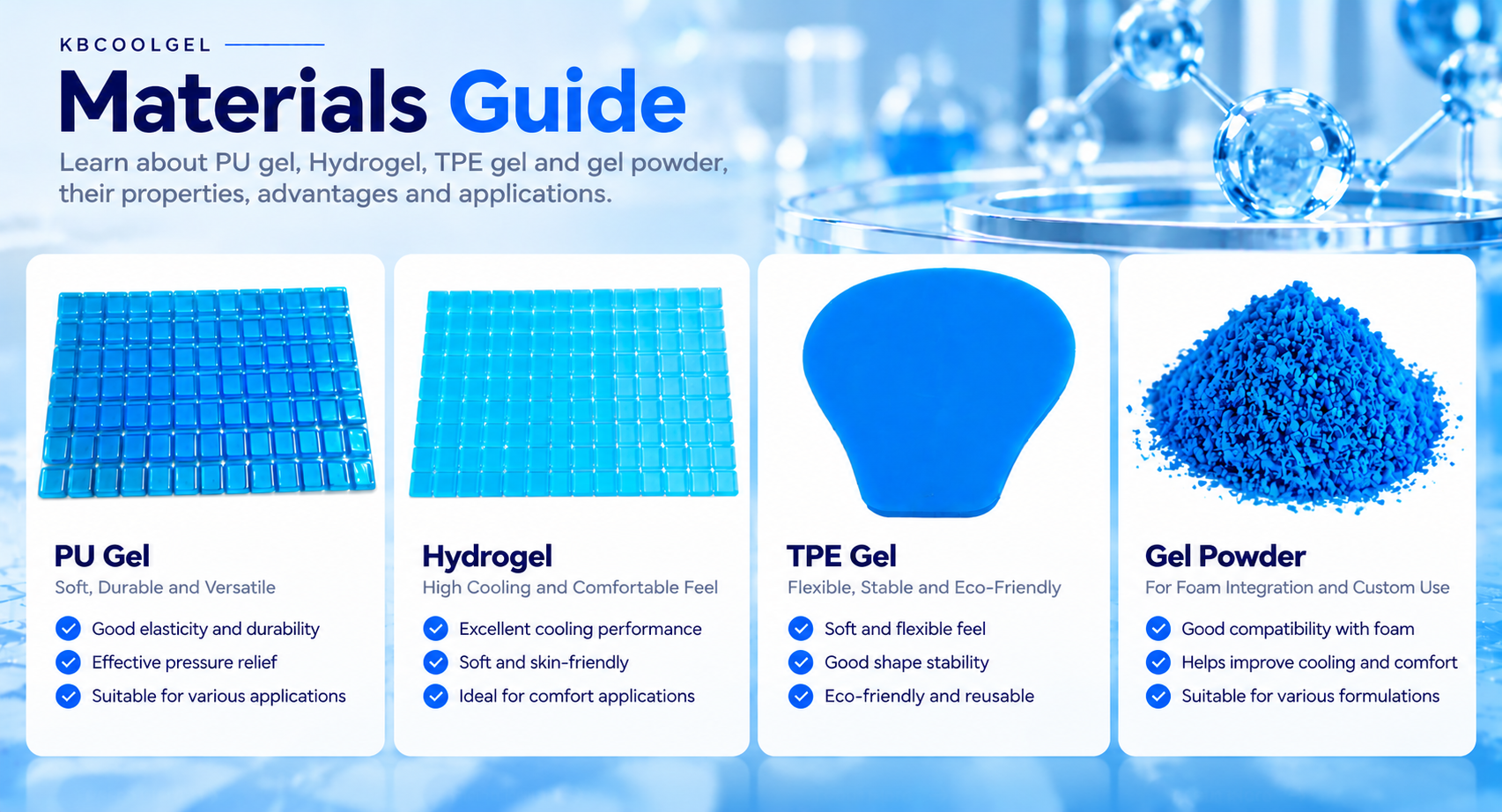
Two options are polyurethane gel (PU gel) and hydrogel.
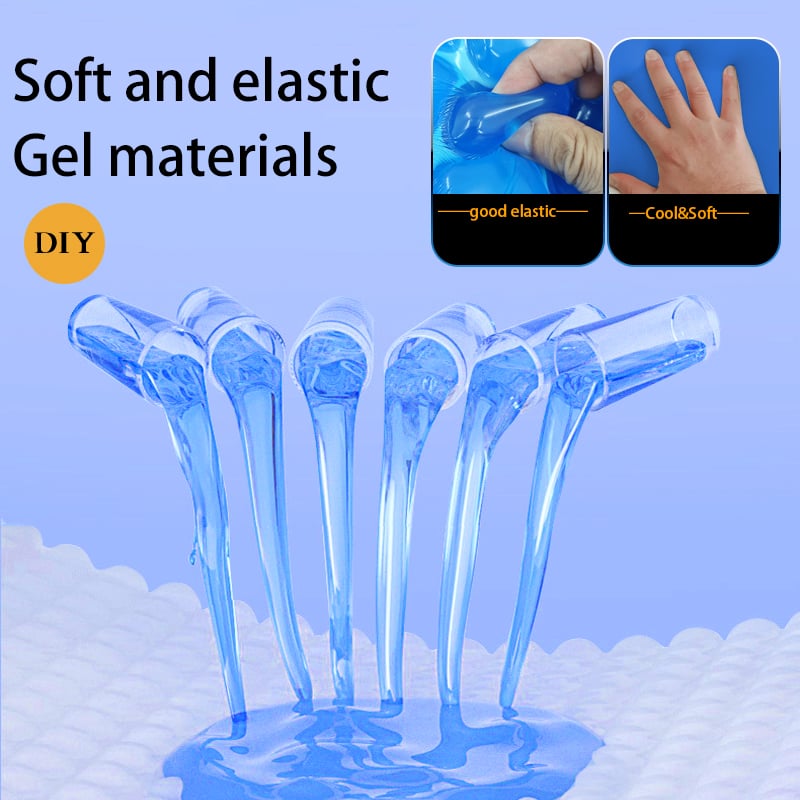
PU gel is a flexible polyurethane-based material used in cushioning and comfort applications.
Depending on the formulation, it can offer:
Soft and elastic cushioning
Customizable hardness
Flexible gel sheet structures
Different thicknesses and surface patterns
Compatibility with selected foam composite processes
PU gel is commonly considered for pillow manufacturers seeking a combination of cushioning and cooling comfort.
Hydrogel is a water-containing polymer gel.
Certain hydrogel formulations can provide a stronger initial cooling sensation than conventional PU gel materials.
Hydrogel may be considered for cooling pillow designs where initial cool-touch performance is especially important.
However, manufacturers must also evaluate moisture retention, protective films, temperature resistance, material stability, and packaging conditions.
There is no single material that is best for every pillow.
PU gel and hydrogel have different advantages and manufacturing considerations.
The most suitable option depends on the pillow design, target cooling performance, production method, product cost, and intended market.
At Kunbao, we manufacture both PU gel and hydrogel materials and help customers evaluate suitable formulations for their applications.
Gel pillows can be divided into several categories according to their construction.
These pillows combine memory foam with a cooling gel layer or gel-infused material.
The memory foam provides the main cushioning and support structure, while the gel component introduces additional comfort characteristics.
Some latex pillow designs incorporate separate gel sheets or gel components into the pillow surface or cover.
The gel structure should be selected according to the latex pillow's shape and assembly method.
These pillows contain gel additives incorporated into the foam itself.
The gel is distributed within the foam rather than supplied as a separate surface sheet.
Certain pillow covers incorporate fabric-backed gel sheets or removable gel inserts.
This approach allows manufacturers to add a gel component to different pillow cores without changing the original filling material.
These are separate cooling gel pads designed to be placed on or attached to compatible pillows.
They can provide an additional cooling contact layer without requiring a permanently integrated gel structure.
The benefits of a gel pillow depend on the materials and finished product construction.
A suitable gel formulation may provide a noticeable cool-touch sensation when the user first contacts the pillow.
Soft gel materials can introduce a different surface cushioning sensation when combined with memory foam or other pillow materials.
Gel sheets, visible gel patterns, and customized cooling structures allow manufacturers to develop pillow designs that differ from conventional products.
Different gel hardness levels, thicknesses, shapes, and surface structures can be selected according to the intended pillow design.
Gel materials can be incorporated into compatible foam structures, bonded to selected pillow surfaces, or integrated into pillow covers.
Actual benefits should be verified through testing of the finished pillow rather than inferred from the gel material alone.
The main difference is the presence of a gel component.
| Feature | Gel Pillow | Regular Memory Foam Pillow |
|---|---|---|
| Main Construction | Foam or filling combined with gel material | Primarily memory foam |
| Cooling Feature | Depends on the gel formulation and structure | Depends on the foam and cover materials |
| Surface Feel | Can include a distinct gel cushioning layer | Mainly determined by memory foam |
| Manufacturing | May require additional gel integration | Conventional foam production |
| Customization | Gel hardness, thickness, shape, and pattern | Foam shape, density, firmness, and cover |
| Material Cost | Includes the additional gel component | No separate gel component required |
A gel pillow is not automatically more comfortable than a regular memory foam pillow.
Comfort depends on the complete construction, including foam firmness, gel properties, pillow height, shape, and individual preferences.
The safety of a gel pillow depends on the specific materials, manufacturing quality, intended use, and applicable testing requirements.
Manufacturers should evaluate factors such as:
Material composition
Chemical compliance
Odor and volatile substances where relevant
Protective coverings
Skin-contact conditions
Durability and leakage resistance
Intended market requirements
At Kunbao, relevant PU gel documentation includes REACH, RoHS, and halogen testing reports.
For selected hydrogel materials, REACH documentation is available.
The applicability of any report should be confirmed for the exact formulation and finished product.
Manufacturers should not assume that a material-level test report automatically certifies an entire finished pillow.
Different manufacturers use different production methods.
Some common approaches include:
Gel Integrated During Foam Molding
A compatible gel insert is positioned in a foam mold and integrated during the foam manufacturing process.
Gel Sheets Bonded to Foam
A suitable gel sheet is attached to a finished memory foam surface using an approved bonding method.
Fabric-Backed Gel Sheets
Gel sheets laminated with compatible fabric are incorporated into specially designed pillow covers.
Finished Gel Inserts
A pre-manufactured gel component is placed into a dedicated pocket or compartment inside the pillow cover.
Gel-Infused Foam Production
Gel additives are incorporated into the foam formulation during foam manufacturing.
Each method requires different material and process considerations.
For pillow factories, selecting a suitable gel structure is important for production consistency, assembly efficiency, and finished product quality.
Yes. Pillow manufacturers can develop customized gel components according to their product requirements.
Common customization options include:
Gel size and shape
Gel hardness and elasticity
Gel thickness
Gel color
Surface patterns
PU gel or hydrogel formulation
Fabric backing
Protective film structures
Edge finishing
Gel and foam composite structures
At Kunbao, we have developed more than ten gel formulations and maintain over 400 existing molds.
We also support custom mold development, sample development, and OEM/ODM production.
This allows manufacturers to select gel materials according to different pillow designs, production processes, and target markets.
Before selecting gel materials for a new pillow project, manufacturers should confirm several important requirements.
Is the pillow made from memory foam, latex, or another filling material?
Is the priority a strong initial cool-touch sensation, additional cushioning, or a balance of both?
What gel dimensions, thickness, hardness, and shape are required?
Will the gel be integrated during molding, bonded to foam, or incorporated into a pillow cover?
Does the project require release paper, protective film, fabric backing, or a finished insert?
Which material documents and finished product tests are required for the intended market?
What are the sample requirements and expected bulk order volume?
By confirming these details early, manufacturers can reduce unnecessary sample revisions and choose a more suitable gel material.
Kunbao is a gel material manufacturer serving pillow factories, bedding manufacturers, and OEM customers.
Since 2011, we have focused on developing and manufacturing customizable gel materials for cooling, cushioning, and comfort applications.
Our capabilities include:
More than 15 years of gel manufacturing experience
More than ten gel formulations
PU gel and hydrogel materials
Different raw material grades
More than 400 existing molds
Custom gel hardness, thickness, size, and shape
Fabric-backed and film-laminated gel sheets
Gel and foam composite development
Custom mold development
OEM and ODM manufacturing support
Sample development and mass production
We supply both semi-finished gel materials and customized gel components for different pillow manufacturing processes.
No. A gel pillow contains a gel component, while a regular memory foam pillow may not. Many gel pillows combine gel materials with memory foam.
Certain gel formulations can provide a noticeable initial cooling sensation. The actual effect and its duration depend on the material and complete pillow construction.
There is no universal duration. Cooling sensation depends on the gel formulation, room temperature, pillow cover, contact conditions, and heat accumulation over time.
Not necessarily. Gel pillows offer additional material and design options, but the best choice depends on the desired comfort, support, and cooling characteristics.
Yes, where the gel material and attachment method are compatible with the foam and finished product requirements.
Yes. Kunbao supplies semi-finished cooling gel sheets and customized gel inserts for manufacturers that produce their own finished pillows.
A gel pillow can be developed using different materials, structures, and production methods.
For manufacturers, choosing the right gel component is essential to achieving the desired cooling comfort, cushioning characteristics, and production compatibility.
At Kunbao, we provide custom cooling gel sheets, gel inserts, and OEM material solutions for memory foam pillow manufacturers, latex pillow factories, and bedding brands.
Developing a new gel pillow or upgrading an existing pillow design?
Share your pillow structure, gel dimensions, thickness, hardness, and manufacturing requirements.
Our team can help you evaluate suitable gel materials and sample options.
REQUEST GEL SAMPLES | DISCUSS YOUR OEM PROJECT
Kunbao — Custom Gel Materials & Solutions Manufacturer Since 2011
Website: www.kbcoolgel.com
 Hot News
2026-08-20
2026-09-08
2026-10-06
2026-09-09
2026-10-11
2026-10-05


 EN