A Complete Guide to Chemical Safety, Thermal Performance, Physical Properties and OEM Material Testing
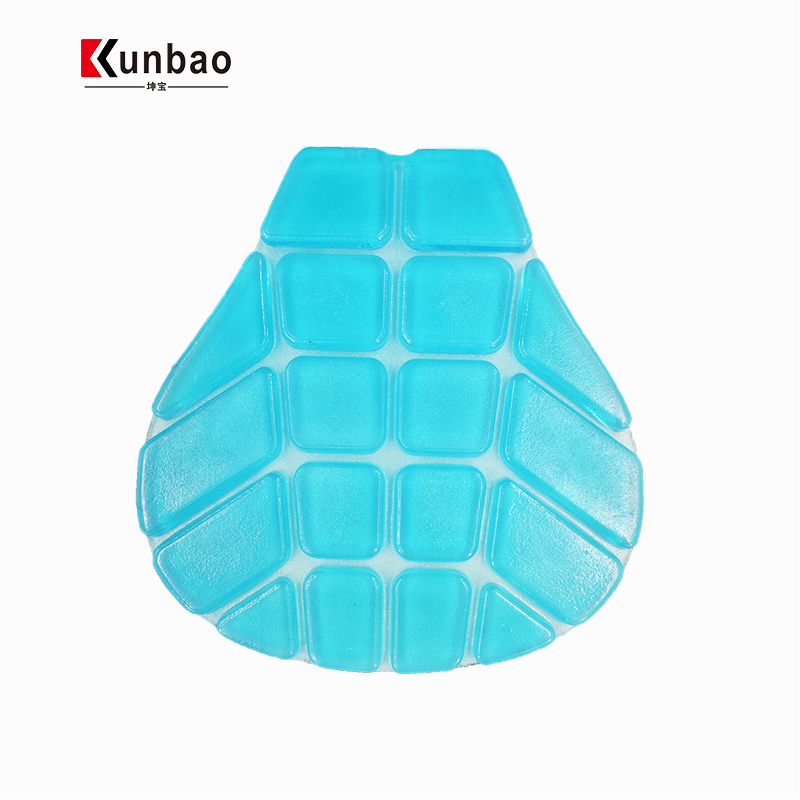
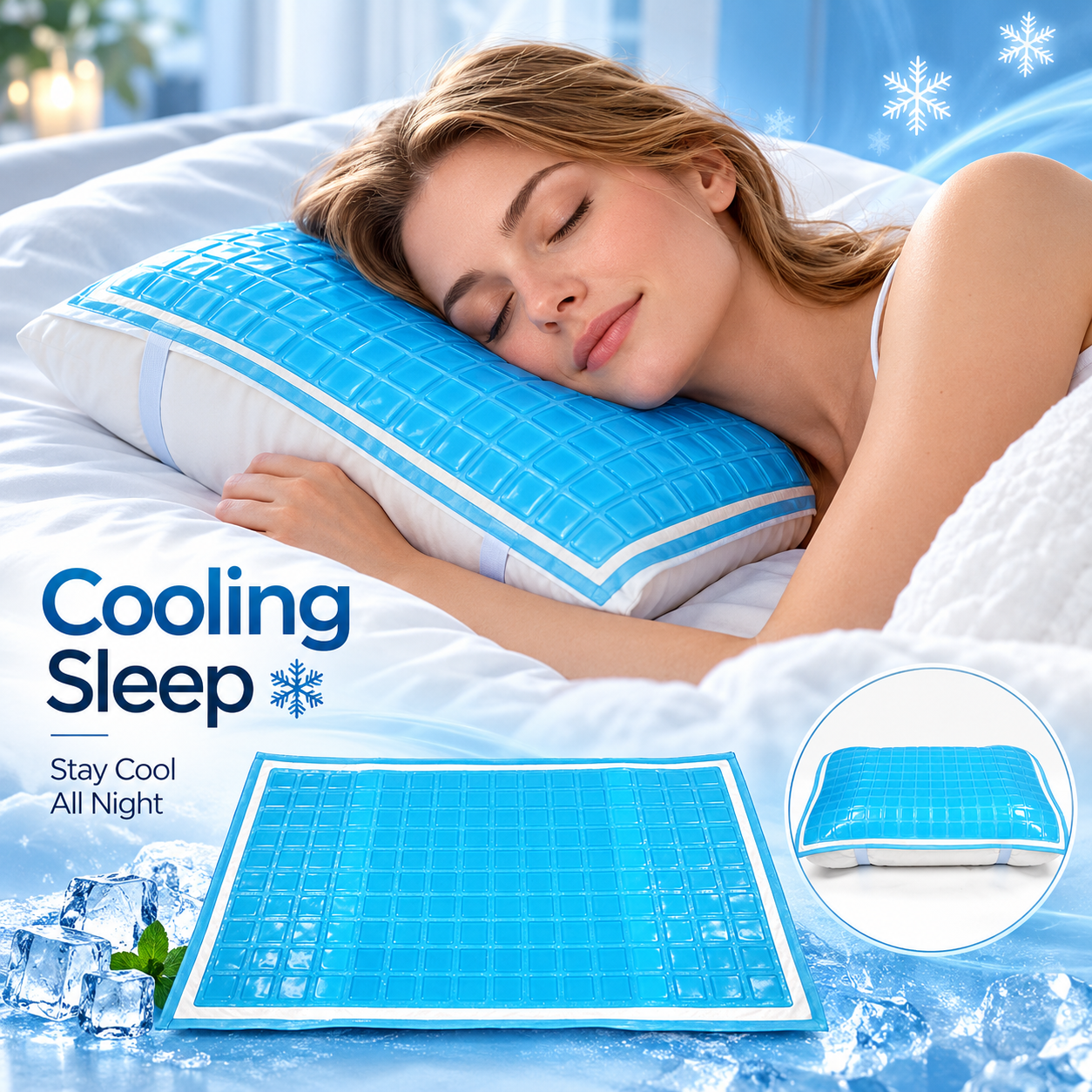
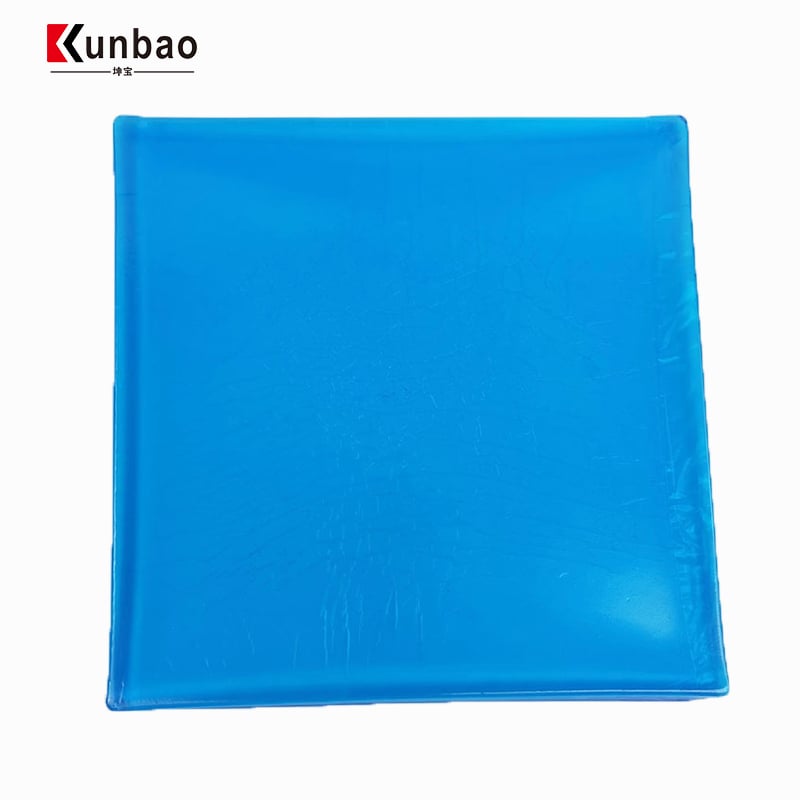
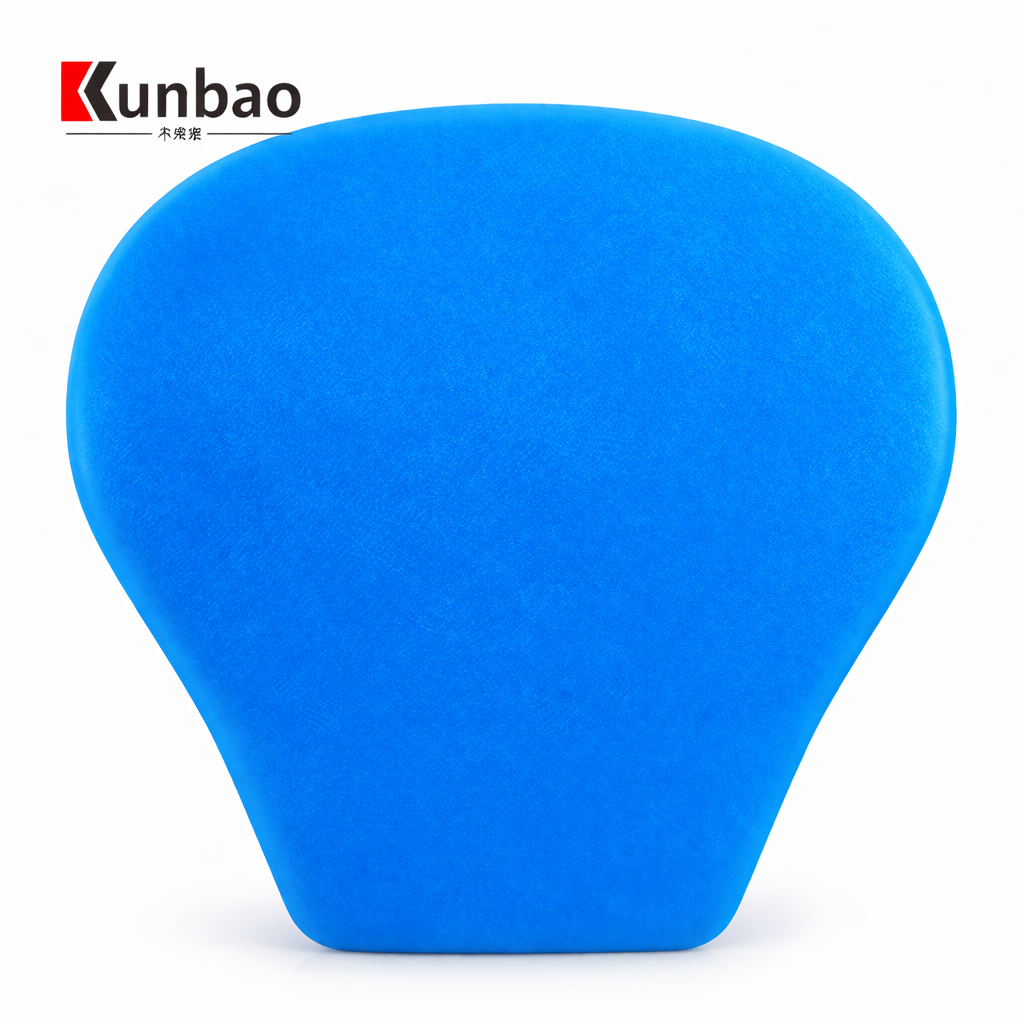
Cooling gel sheets are widely used in memory foam pillows, mattresses, seat cushions, medical positioning pads, protective products, and other comfort applications.
For manufacturers and OEM buyers, choosing the right cooling gel material involves more than checking its softness, color, thickness, or cooling sensation.
What tests are available for cooling gel sheets, and which reports should manufacturers request before placing an order?
Different applications may require different testing methods, including chemical safety, thermal performance, mechanical properties, and long-term durability.
However, not every cooling gel sheet requires the same tests, and not every supplier has completed every possible evaluation.
At Kunbao, we manufacture customized PU gel sheets, hydrogel sheets, and gel composite materials for industrial and consumer product manufacturers.
In this guide, we explain the main testing categories, the documents currently available for our materials, and additional tests that can be considered for specific OEM projects.
Testing helps manufacturers understand whether a gel material is suitable for its intended application.
For example, a gel sheet used in a memory foam pillow may have different performance requirements from a gel pad used in a wheelchair cushion or medical positioning product.
Depending on the application, manufacturers may need to evaluate:
Chemical composition and restricted substances
Cooling and heat-transfer characteristics
Hardness and cushioning properties
Compression and deformation
Tensile strength and elongation
Dimensional consistency
Temperature resistance
Long-term durability
Skin-contact suitability
VOC emissions
Compatibility with fabrics, films, adhesives, and foam
The purpose of testing is to verify specific material characteristics under defined conditions.
A single test report cannot demonstrate every property of a cooling gel sheet.
For reliable material selection, buyers should understand what each report measures and whether it applies to the exact gel formulation being purchased.
REACH is an important chemical regulatory framework in the European Union.
It addresses the registration, evaluation, authorisation, and restriction of chemical substances.
For cooling gel materials, suppliers may provide relevant REACH test reports covering specified substances or requirements.
Depending on the report scope, testing may address:
Selected substances of very high concern (SVHCs)
Certain restricted substances
Specified chemical content limits
Other applicable chemical requirements
The exact substances and limits depend on the selected test program and applicable requirements.
No.
A REACH test report provides information about the substances or requirements included in that particular test.
It does not automatically demonstrate:
Skin irritation performance
Biocompatibility
VOC emissions
Cooling effectiveness
Long-term durability
Finished-product compliance with every applicable requirement
Kunbao has relevant REACH test documentation for selected PU gel and hydrogel materials.
Customers can request the available reports for review.
The applicable report should be matched to the actual material formulation and tested sample.
RoHS stands for Restriction of Hazardous Substances.
It is primarily an EU regulatory framework for certain electrical and electronic equipment.
RoHS testing is sometimes requested by OEM customers as additional information about specified hazardous substances.
Depending on the testing program, it may evaluate substances such as:
Lead
Cadmium
Mercury
Hexavalent chromium
Certain brominated flame retardants
Certain restricted phthalates
Ordinary non-electrical cooling gel pillows are generally outside the scope of the RoHS Directive.
However, customers may still request relevant RoHS testing as part of their own material qualification procedures.
Kunbao has RoHS test documentation for selected PU gel materials.
The report can be provided for review according to the material being supplied.
RoHS testing should not be described as a universal safety certification for all bedding products.
Some manufacturers request halogen testing as part of their material specifications.
Halogen testing may evaluate specified elements or compounds, depending on the laboratory method and customer requirements.
Common reasons include:
Internal material specifications
Environmental procurement requirements
Restricted substance management
Supplier qualification procedures
The report provides results for the specified test items.
It does not automatically establish that the material is free from every halogen-containing substance or meets all chemical safety requirements.
Kunbao has relevant halogen test documentation for selected PU gel materials.
Customers can review the report scope and results for the applicable material.
Cooling performance is one of the most important characteristics of cooling gel sheets.
However, the word "cooling" can refer to several different physical properties.
Thermal conductivity testing is one method used to evaluate how a material conducts heat.
Thermal conductivity describes how effectively heat passes through a material under defined conditions.
Materials with different thermal conductivity values may produce different heat-transfer behavior.
When a gel sheet comes into contact with warmer skin, heat transfers according to the temperature difference and the properties of the materials.
Thermal conductivity can help manufacturers compare different gel formulations.
However, cooling sensation also depends on:
Thermal effusivity
Heat capacity
Material thickness
Surface contact
Initial temperature
Covering fabrics
Surrounding foam structure
Ambient temperature
Higher thermal conductivity alone does not prove that a gel sheet will stay cool for a longer period.
Kunbao has comparative thermal test information for selected PU gel and hydrogel materials.
This information can help customers understand differences between the tested formulations under the specified conditions.
Actual cooling performance in a finished pillow, mattress, or cushion should be evaluated separately.
In addition to thermal conductivity, manufacturers may request tests designed to evaluate the initial cool-touch sensation.
For textile-related products, some test programs use contact-cooling measurements such as Q-max, where applicable to the sample structure and method.
Q-max is a measure of peak transient heat flow under specified test conditions.
It is commonly used in evaluating the cool-touch characteristics of certain textile materials.
The suitability of the method depends on the gel material, surface structure, and test equipment.
For soft or thick gel sheets, the laboratory should confirm whether the method is appropriate and how the specimen will be prepared.
Not necessarily.
A higher initial contact-cooling measurement does not automatically prove longer-lasting cooling during continuous use.
Manufacturers should distinguish between initial cool-touch performance and cooling duration.
Hardness is an important property for gel materials used in cushioning and comfort applications.
Different products require different softness levels.
For example:
Pillow gel sheets may require a soft and flexible feel.
Mattress gel layers may require a balance between softness and structural support.
Motorcycle seat inserts may require suitable cushioning under repeated loading.
Medical positioning pads may require specific pressure-distribution and support characteristics.
Possible methods include suitable indentation, durometer, or compression-based evaluations.
However, very soft gels may not be accurately characterized using the same methods as harder plastics or rubber materials.
The correct method depends on the gel's properties.
Kunbao offers multiple gel formulations and customizable hardness levels.
Customers can compare physical samples to select a suitable material for their application.
The appropriate numerical test method and acceptance criteria can be established according to the project requirements.
Compression testing evaluates how a material responds when pressure is applied.
Compression set testing evaluates the permanent deformation remaining after a defined compression and recovery procedure.
These tests can be relevant for:
Memory foam pillows
Mattress cushioning layers
Wheelchair cushions
Motorcycle seat inserts
Pressure-distribution pads
Other cushioning applications
A gel sheet should provide suitable cushioning while maintaining the intended structure during use.
Depending on the application, manufacturers may need to evaluate:
Compression force
Deformation under load
Recovery after compression
Permanent deformation
Performance after repeated loading
Compression results for a standalone gel sheet may differ from those of a gel-and-foam composite.
For example, a gel sheet bonded to memory foam behaves as a combined structure.
Manufacturers should therefore test the complete composite when the final application requires it.
Compression set and fatigue testing can be arranged or evaluated according to specific project requirements; they should not be assumed to be included in Kunbao's existing standard reports.
Tensile testing measures how a material behaves when stretched.
Elongation testing measures how much the material extends before a specified condition or failure occurs.
These properties can be important when gel sheets are:
Stretched during installation
Bonded to contoured foam
Laminated with fabrics
Incorporated into flexible products
Subjected to repeated movement
A gel sheet that is too stiff may not conform well to curved pillow surfaces.
A material with insufficient strength may tear during handling or assembly.
However, very high elongation does not automatically mean better product durability.
Manufacturers should evaluate tensile properties together with the intended application and assembly process.
Tear resistance testing evaluates a material's resistance to the propagation of a tear under specified conditions.
This can be relevant for thin gel sheets, patterned gel products, and components exposed to stretching during assembly.
Potential applications include:
Cooling gel pillow inserts
Flexible mattress gel layers
Gel seat cushions
Protective gel products
Customized gel shapes
The appropriate test method should be selected based on the material's softness, thickness, and structure.
Dimensional consistency is important for OEM production.
Cooling gel sheets must fit the customer's pillow molds, foam surfaces, mattress structures, or other assemblies.
Common inspection items include:
Length
Width
Thickness
Shape
Surface pattern
Hole positions
Edge dimensions
Weight, where relevant
Incorrect dimensions can cause:
Assembly problems
Misalignment during bonding
Wrinkles
Edge lifting
Material waste
Increased production costs
Kunbao manufactures gel sheets in customized sizes, shapes, thicknesses, and patterns.
Dimensional tolerances should be agreed upon according to the material type, manufacturing process, and product design.
Inspection requirements can be incorporated into the customer's approved product specification.
Cooling gel sheets may be exposed to different temperatures during production, storage, transportation, and use.
Temperature resistance testing can help evaluate how materials respond to these conditions.
Potential evaluations include:
Elevated-temperature exposure
Low-temperature exposure
Thermal cycling
Changes in appearance
Changes in hardness
Surface tackiness
Film adhesion
Material deformation
Migration of certain components
Hydrogel materials may require additional attention to moisture retention and protective film performance.
Depending on the formulation and structure, elevated temperatures can affect material stability.
For film-laminated hydrogel products, manufacturers may need to evaluate:
Film compatibility
Edge sealing
Moisture loss
Surface changes
Packaging stability
The appropriate test conditions should reflect the intended product and distribution environment.
Some customers require VOC testing, especially for bedding, automotive seating, or other applications involving prolonged indoor use.
VOC stands for volatile organic compounds.
Depending on the materials and manufacturing process, emissions may originate from:
Gel components
Foam
Adhesives
Coatings
Fabrics
Other composite materials
No.
REACH documentation and VOC emissions testing address different questions.
A material may meet the specified requirements in a REACH test report while still requiring separate VOC evaluation for a particular application.
VOC and odor testing requirements can be discussed for specific OEM projects.
The test method, sample structure, limits, and acceptance criteria should be agreed upon in advance.
A VOC test result for a gel sheet should not automatically be presented as the VOC performance of a complete gel-and-foam product.
For gel products intended for direct or prolonged skin contact, additional safety evaluations may be necessary.
These may include relevant skin irritation or sensitization assessments.
For certain medical applications, biological evaluation may also be required according to the intended use and applicable regulatory framework.
No.
Testing requirements depend on the product's intended use, contact conditions, target market, and applicable regulations.
For example, a gel insert enclosed inside a pillow cover may have different exposure considerations from a medical gel pad intended for direct skin contact.
No.
A REACH test report is not a substitute for skin irritation, sensitization, or medical biocompatibility testing.
Customers requiring these evaluations should confirm the relevant test methods and product requirements before sample submission.
Cooling gel sheets are often combined with other materials.
Examples include:
Memory foam
PU foam
Latex foam
Stretch fabrics
Cooling-touch fabrics
TPU films
PVC films
EVA films
For these applications, bonding and lamination performance can be important.
Possible evaluations include:
Peel strength
Bond consistency
Edge lifting
Delamination
Repeated compression
Temperature-related adhesion changes
Cleaning compatibility
The correct testing method depends on the actual composite structure.
For example, a fabric-backed gel sheet may require different adhesion testing from a film-laminated hydrogel insert.
Kunbao supplies different gel materials for different OEM applications.
Our current documentation and project-specific testing options are summarized below.
| Test or Evaluation | PU Gel | Hydrogel |
|---|---|---|
| REACH-related testing | Available documentation for selected materials | Available documentation for selected materials |
| RoHS testing | Available documentation for selected materials | Confirm according to project |
| Halogen testing | Available documentation for selected materials | Confirm according to project |
| Comparative thermal performance | Available for selected tested formulations | Available for selected tested formulations |
| Hardness evaluation | Project-specific | Project-specific |
| Dimensional inspection | Available as part of production quality control | Available as part of production quality control |
| Compression testing | Subject to project requirements | Subject to project requirements |
| Tensile and tear testing | Subject to project requirements | Subject to project requirements |
| Temperature and aging testing | Subject to project requirements | Subject to project requirements |
| VOC testing | Additional testing may be required | Additional testing may be required |
| Skin irritation testing | Additional testing may be required | Additional testing may be required |
| Biocompatibility testing | Application-dependent | Application-dependent |
| Adhesion and lamination testing | Project-specific | Project-specific |
Important: "Available documentation" refers to existing reports for selected tested materials. "Project-specific" means the evaluation must be confirmed separately and does not imply that an existing third-party report is available.
Before requesting documentation, customers should confirm the material type, formulation, intended application, and required test items.
Different applications have different priorities.
Common considerations include:
Chemical safety documentation
Initial cooling performance
Hardness
Thickness consistency
Foam bonding compatibility
VOC requirements, where applicable
Common considerations include:
Thermal performance
Compression behavior
Dimensional consistency
Material stability
Lamination performance
VOC and odor requirements, where applicable
Common considerations include:
Hardness and cushioning
Compression recovery
Repeated loading
Tear resistance
Temperature resistance
Dimensional stability
Depending on the intended medical application, requirements may include:
Material chemical characterization
Biological safety evaluation
Compression and support characteristics
Durability
Cleaning and disinfection compatibility
Product-specific regulatory requirements
Medical applications should be assessed according to their actual intended use and applicable regulations.
Common considerations include:
Compression performance
Mechanical durability
Temperature resistance
Adhesion
Chemical compatibility
Dimensional consistency
The most useful test program is the one that matches the intended application rather than simply including the largest number of reports.
When contacting a gel material supplier, OEM buyers should provide the following information:
1. Material Type
PU gel, hydrogel, or another gel formulation.
2. Intended Application
Pillow, mattress, seating, medical positioning, industrial cushioning, or another application.
3. Required Test Items
For example, REACH, RoHS, thermal conductivity, VOC, compression, or skin irritation.
4. Target Market
The destination country or region may affect regulatory requirements.
5. Sample Structure
Standalone gel sheet, film-laminated gel, fabric-backed gel, or gel-and-foam composite.
6. Test Standard and Acceptance Criteria
Where applicable, provide the required method, limits, and customer specifications.
7. Production Requirements
Confirm whether the test will be used for sample approval, supplier qualification, or routine production control.
This information helps suppliers and laboratories determine the appropriate testing approach.
Kunbao has specialized in gel material manufacturing since 2011.
We supply semi-finished gel sheets and customized gel components to manufacturers in the bedding, seating, rehabilitation, personal comfort, and industrial sectors.
Our capabilities include:
More than 15 years of gel manufacturing experience
More than ten gel formulations
Different raw material grades
PU gel and hydrogel options
Custom hardness and thickness
Custom sizes, shapes, colors, and patterns
More than 400 existing molds
Fabric-backed and film-laminated gel sheets
Gel and foam composite development
Free mold development for eligible OEM projects
Sample development and mass production support
Different applications require different material characteristics and testing programs.
We help customers evaluate suitable gel formulations, review available material documentation, and discuss additional testing requirements where necessary.
Common tests include REACH-related chemical testing, RoHS, halogen testing, thermal conductivity, hardness, compression, tensile strength, tear resistance, temperature resistance, VOC, and application-specific safety evaluations.
Requirements depend on the target market, product classification, chemical composition, and applicable regulatory obligations. Relevant REACH documentation is commonly requested by EU customers.
Kunbao has relevant REACH test documentation for selected PU gel and hydrogel materials. The applicable report should be confirmed for the exact material.
Relevant RoHS and halogen test documentation is available for selected PU gel materials.
Yes. Thermal conductivity and other appropriate thermal measurements can help evaluate specific cooling-related properties under defined conditions.
Not necessarily. Cooling duration depends on multiple factors, including heat capacity, thickness, initial temperature, contact conditions, and surrounding materials.
VOC testing requirements can be discussed for specific projects. The method, limits, sample structure, and testing arrangements must be confirmed separately.
A material test report does not automatically establish medical-device compliance or suitability for a particular medical application. Additional evaluations may be required.
Customers can submit their required standards and specifications for review. Additional testing arrangements depend on the material, laboratory capability, and agreed project requirements.
Cooling gel sheet testing covers several important areas, including chemical safety, thermal performance, physical properties, durability, and application-specific requirements.
No single report can demonstrate every aspect of material performance.
For OEM buyers, the best approach is to select the required tests according to the intended product, target market, and actual material structure.
At Kunbao, we manufacture customized PU gel sheets, hydrogel sheets, and gel composite materials for a wide range of applications.
We can provide available material documentation for selected formulations and discuss additional testing requirements for specific projects.
Looking for cooling gel sheets with relevant material test reports?
Send us your application, gel specifications, target market, and required test items.
Our team can help you review suitable material options and available documentation.
REQUEST GEL SAMPLES | REQUEST AVAILABLE TEST REPORTS
Kunbao — Custom Gel Materials & Solutions Manufacturer Since 2011
Website: www.kbcoolgel.com
 Hot News
2026-08-20
2026-09-08
2026-10-06
2026-09-09
2026-10-11
2026-10-05


 EN