A Guide to Gel Pillow Materials, Skin Contact, Chemical Safety and Testing for Pillow Manufacturers
Cooling gel pillows are widely used in bedding products designed to provide a cooler sleeping surface and additional cushioning comfort.
However, one important question often comes up:
Are cooling gel pillows safe to use?
Consumers may be concerned about chemicals, skin contact, unusual odors, or what happens if a gel pillow becomes damaged.
For pillow manufacturers and bedding brands, material safety is also an important part of product development, supplier selection, and quality control.
The short answer is that cooling gel pillows can be designed for safe use, but their safety depends on the specific gel formulation, protective structure, manufacturing quality, and intended application.
Not all cooling gel pillows use the same materials or have the same test documentation.
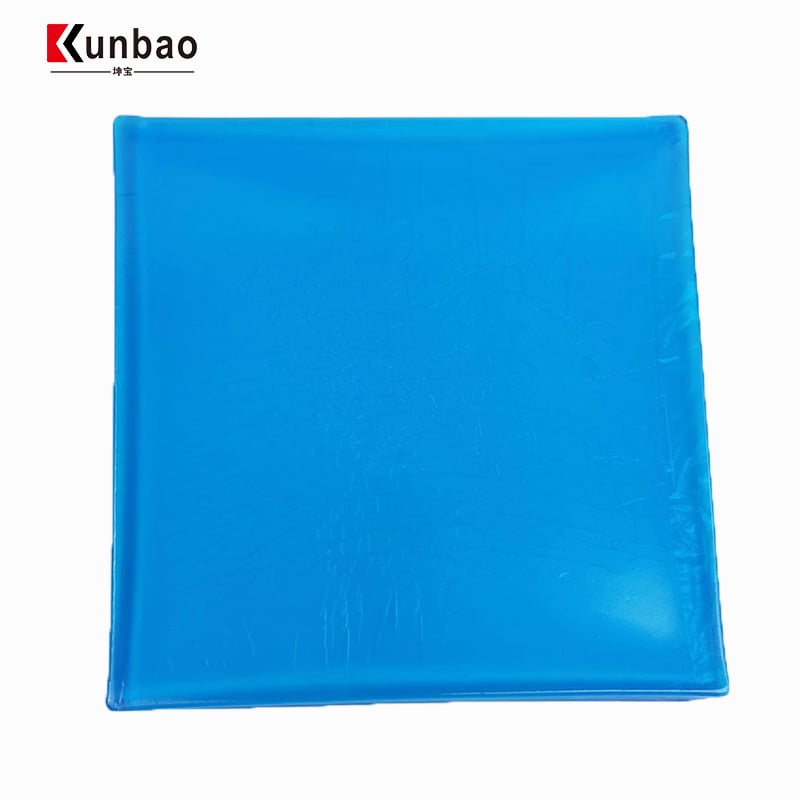
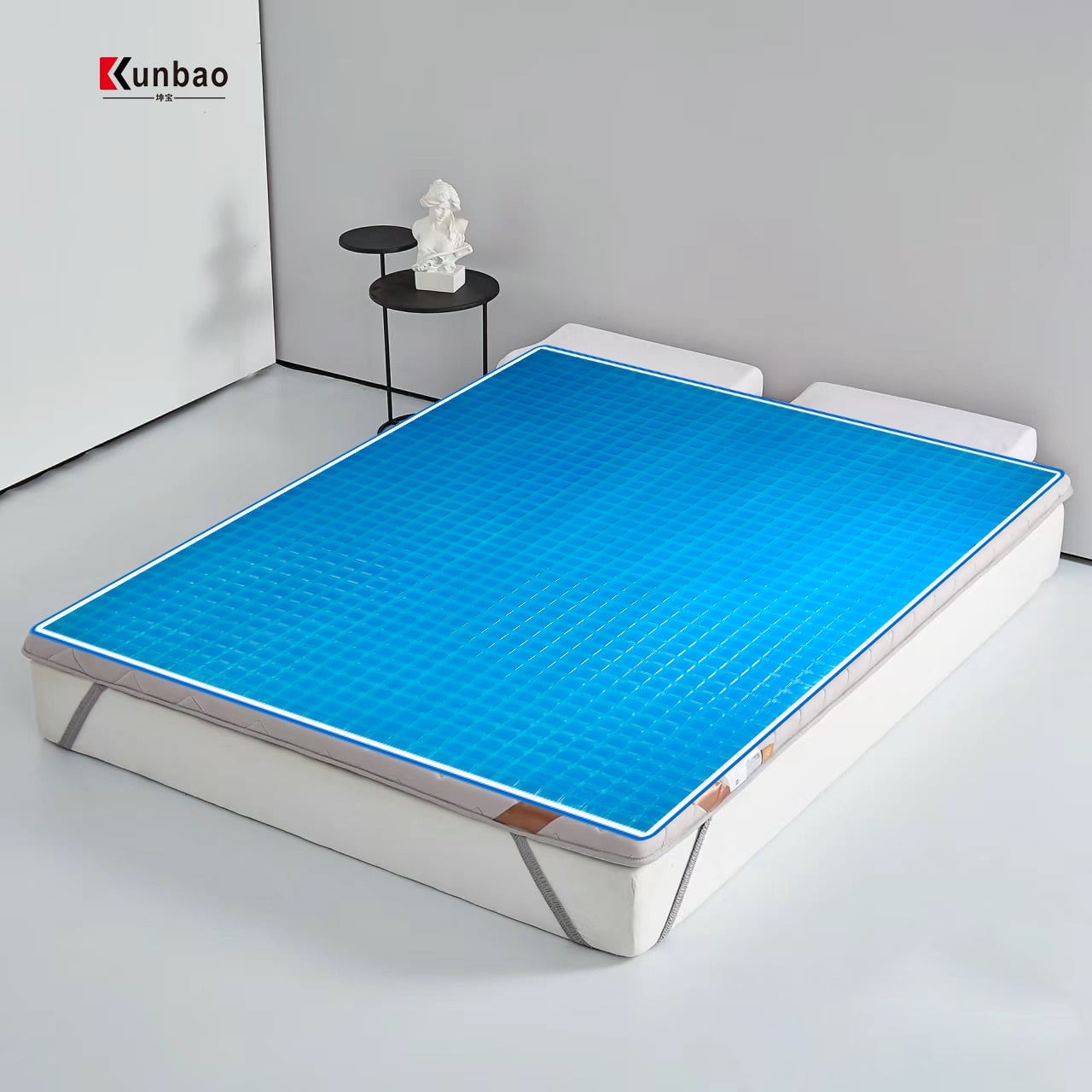
At Kunbao, we manufacture customizable PU gel sheets, hydrogel sheets, and gel inserts for OEM pillow manufacturers.
In this guide, we explain the main safety considerations, differences between gel materials, relevant chemical testing, and what manufacturers should check before purchasing cooling gel sheets.
Cooling gel pillows are manufactured using different material structures.
The gel component may be combined with memory foam, latex, fabric covers, or other pillow materials.
Two gel materials used in cooling pillow development are PU gel and hydrogel.
PU gel is a polyurethane-based material that can be formulated for different cushioning and flexibility requirements.
Depending on its formulation, PU gel can be manufactured in different hardness levels, thicknesses, colors, and shapes.
PU gel sheets may be used in selected foam composite and pillow cover applications.
However, the safety characteristics of PU gel depend on the actual raw materials, formulation, manufacturing process, and applicable test results.
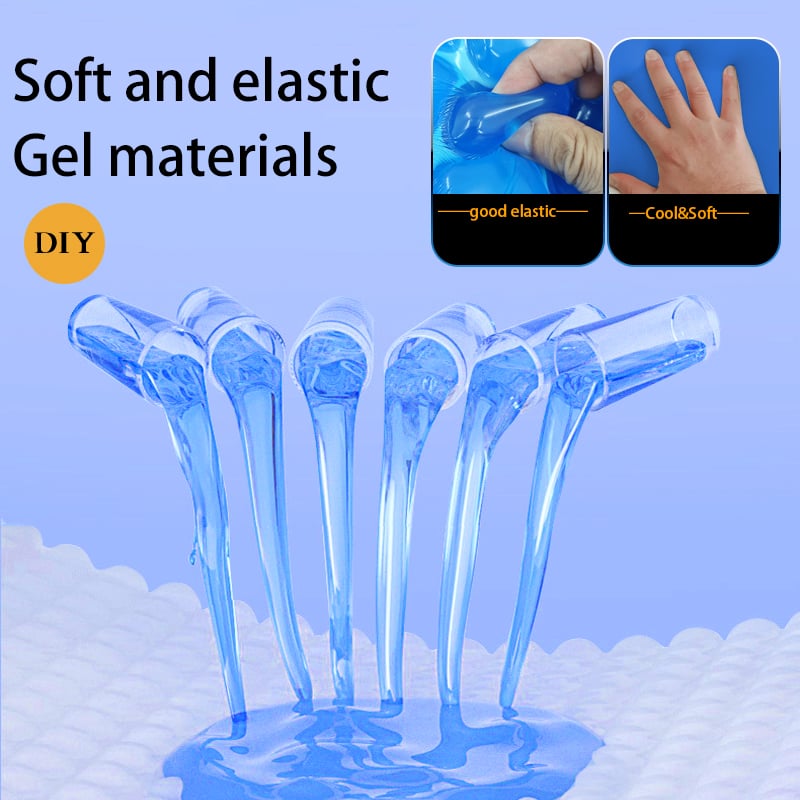
Hydrogel is a water-containing polymer material.
Certain hydrogel formulations can provide a noticeable initial cooling sensation.
Hydrogel products may also incorporate protective films or other layers depending on their intended application.
For hydrogel pillow inserts, manufacturers should pay attention to moisture retention, protective layers, material stability, and the integrity of the finished structure.
Important: The terms "PU gel" and "hydrogel" describe broad material categories. They do not automatically guarantee that every formulation is suitable for every type of skin contact or finished pillow application.
A cooling gel pillow should not be classified as toxic or non-toxic based on its appearance or material name alone.
Its chemical safety depends on the substances used, potential exposure during normal use, and the requirements of the intended market.
For example, manufacturers may need to evaluate:
Restricted chemical substances
Residual manufacturing chemicals
Volatile organic compounds (VOCs), where relevant
Odor and emissions
Surface coatings or protective films
Adhesives and laminated fabrics
Chemical migration under intended use conditions
A finished cooling gel pillow may contain several materials, including foam, gel, fabric, adhesives, and packaging components.
Each of these materials may contribute to the finished product's overall safety profile.
For this reason, material-level test reports are useful, but they do not automatically establish the safety or regulatory compliance of the entire finished pillow.
Manufacturers should review applicable documentation for the actual material supplied and determine whether additional finished-product testing is required.
This is an important consideration, especially for pillows where the gel surface may be close to the user's head or face.
The answer depends on whether the gel is exposed, covered by fabric, or enclosed within a protective structure.
In many cooling pillow designs, the gel is positioned beneath a fabric pillow cover.
The fabric acts as an intervening layer between the user's skin and the gel material.
However, manufacturers should still evaluate the complete product for its intended use, including durability and possible exposure if the cover becomes damaged.
Some cooling pillows feature a visible or directly accessible gel surface.
For these products, direct skin-contact suitability becomes particularly important.
Manufacturers may need to consider appropriate skin irritation, sensitization, or other relevant assessments based on the material, exposure conditions, and applicable requirements.
Certain gel inserts incorporate protective films that remain in place during use.
These films can serve as a barrier between the gel and other materials.
However, their effectiveness depends on the film type, thickness, sealing quality, and long-term durability.
A REACH or RoHS test report should not be presented as proof that a gel material has passed a skin irritation or biocompatibility test.
Those are different evaluations with different purposes.
Different markets and applications may require different types of testing.
Below are several commonly discussed documents and evaluations.
REACH is the European Union's chemical regulation covering the Registration, Evaluation, Authorisation and Restriction of Chemicals.
For gel materials, suppliers may provide relevant test reports or declarations addressing specified substances or restrictions.
However, REACH is a broad regulatory framework rather than one universal product certification.
Manufacturers should check which substances, requirements, and material samples are covered by the documentation.
RoHS is an EU directive restricting certain hazardous substances in electrical and electronic equipment.
Although RoHS test reports may provide useful information about selected substances, RoHS is not generally a mandatory certification for ordinary non-electrical pillows.
Its relevance should be evaluated according to the actual product and customer requirements.
Halogen testing may be requested by certain customers to evaluate specified halogen elements or substances.
The meaning of a halogen test result depends on the substances tested, methods used, and acceptance criteria.
A halogen report should not be interpreted as a comprehensive chemical safety certification.
Volatile organic compound testing may be relevant where customers are concerned about emissions or odor.
VOC performance depends on the actual formulation, manufacturing conditions, curing, adhesives, foam, and other components.
Where VOC requirements apply, manufacturers should agree on the appropriate test method and acceptance criteria.
For products intended to have direct or prolonged skin contact, relevant skin-contact assessments may be appropriate.
The required testing depends on the intended use, material structure, and applicable regulatory or customer requirements.
OEKO-TEX STANDARD 100 is a certification system used for textiles and certain related components tested for specified harmful substances.
If a customer requires this certification, manufacturers should confirm whether the exact product or component has a valid certificate covering the relevant scope.
A material should not be described as OEKO-TEX certified unless the applicable certification has actually been obtained.
Neither PU gel nor hydrogel should automatically be described as safer based only on its material category.
Both can be developed using different formulations and raw material grades.
Their safety must be evaluated according to their actual composition, exposure conditions, and finished product design.
| Safety Consideration | PU Gel | Hydrogel |
|---|---|---|
| Material composition | Depends on polyurethane formulation | Depends on water-containing polymer formulation |
| Chemical safety | Requires formulation-specific evaluation | Requires formulation-specific evaluation |
| Skin contact | Depends on testing and exposure conditions | Depends on testing and exposure conditions |
| Protective structure | May use backing or covering materials | May require particular attention to protective films and sealing |
| Material stability | Depends on formulation and conditions | Moisture retention and stability require evaluation |
| Documentation | Check reports for the exact material | Check reports for the exact material |
For pillow manufacturers, choosing between PU gel and hydrogel should involve more than cooling performance.
Chemical documentation, durability, material stability, and manufacturing compatibility are also important.
Not all cooling gel pillows contain free-flowing liquid.
Some use flexible solid-like gel sheets, while others use enclosed gel structures.
The consequences of damage therefore depend on the specific material and construction.
A damaged gel sheet may lose its intended shape or cushioning performance.
Depending on the formulation, it may also expose material that was originally covered.
If a hydrogel insert has a protective enclosure or sealed structure, damage may compromise that protection.
Depending on the formulation, moisture or other components may migrate from the damaged material.
If a gel pillow insert is torn, leaking, unusually sticky, or otherwise visibly damaged:
Stop using the damaged component.
Avoid unnecessary contact with exposed material.
Follow the manufacturer's handling instructions.
Replace the component when appropriate.
Keep damaged materials away from children and pets until properly handled.
If accidental exposure occurs, follow the product's safety instructions and seek appropriate medical or poison-control advice when needed.
For manufacturers, the key is to validate material durability and provide suitable care and handling instructions for the finished product.
Skin irritation is possible with many materials, depending on their composition and the user's sensitivity.
A gel pillow should not be assumed to be hypoallergenic simply because it contains cooling gel.
Potential factors include:
Gel formulation
Surface additives
Protective films
Pillow cover fabrics
Adhesives
Residual chemicals
Friction and prolonged contact
Individual skin sensitivity
For products intended for direct skin contact, manufacturers should evaluate whether additional skin-contact testing is necessary.
The finished product should also be designed to minimize unnecessary exposure to internal materials.
Odor does not always indicate a hazardous product, and the absence of odor does not prove chemical safety.
New pillows may have odors originating from foam, gel, adhesives, fabrics, or packaging.
The type and intensity of odor depend on the materials and manufacturing conditions.
For manufacturers, odor evaluation should be considered separately from chemical emissions testing.
Where customers have specific VOC or odor requirements, appropriate testing should be arranged using agreed methods.
A supplier should not claim that a product is completely VOC-free without suitable evidence.
Temperature can influence the behavior of some gel materials.
Different formulations may respond differently to heat, prolonged storage, or temperature fluctuations.
Potential considerations include:
Changes in material softness
Surface tackiness
Film adhesion
Moisture loss
Migration of certain components
Changes in appearance
Packaging stability
Hydrogel structures may require particular attention to moisture retention and protective film compatibility.
Manufacturers should evaluate the gel material under relevant transportation, storage, and intended-use conditions.
For example, a material that performs well at normal room temperature may require additional testing before being approved for prolonged high-temperature storage.
Temperature resistance should be confirmed through appropriate testing rather than assumed from the material name.
Safety should be considered during the entire product development process.
Choose a supplier that can explain its material options and provide relevant documentation.
Determine whether the gel will be exposed, fabric-covered, or enclosed inside the pillow.
Check the applicable test reports and confirm that they correspond to the actual formulation or material grade.
Choose compatible fabrics, films, and backing structures according to the intended product design.
Test the complete pillow where necessary, including relevant chemical, durability, adhesion, and skin-contact requirements.
Ensure that the approved formulation and material specifications are maintained during mass production.
Include suitable care, storage, handling, and damage-related instructions for the finished product.
Kunbao manufactures customizable PU gel and hydrogel materials for pillow manufacturers and other OEM applications.
Our available documentation includes:
PU Gel Materials
Relevant REACH test documentation
RoHS test documentation
Halogen test documentation
Hydrogel Materials
Relevant REACH test documentation
Available comparative thermal performance information
The scope of each report depends on the tested material and specified test items.
For projects requiring additional VOC, skin-contact, or finished-product testing, the necessary methods and acceptance criteria should be confirmed separately.
We do not treat a general material test report as proof of compliance with every regulation or application.
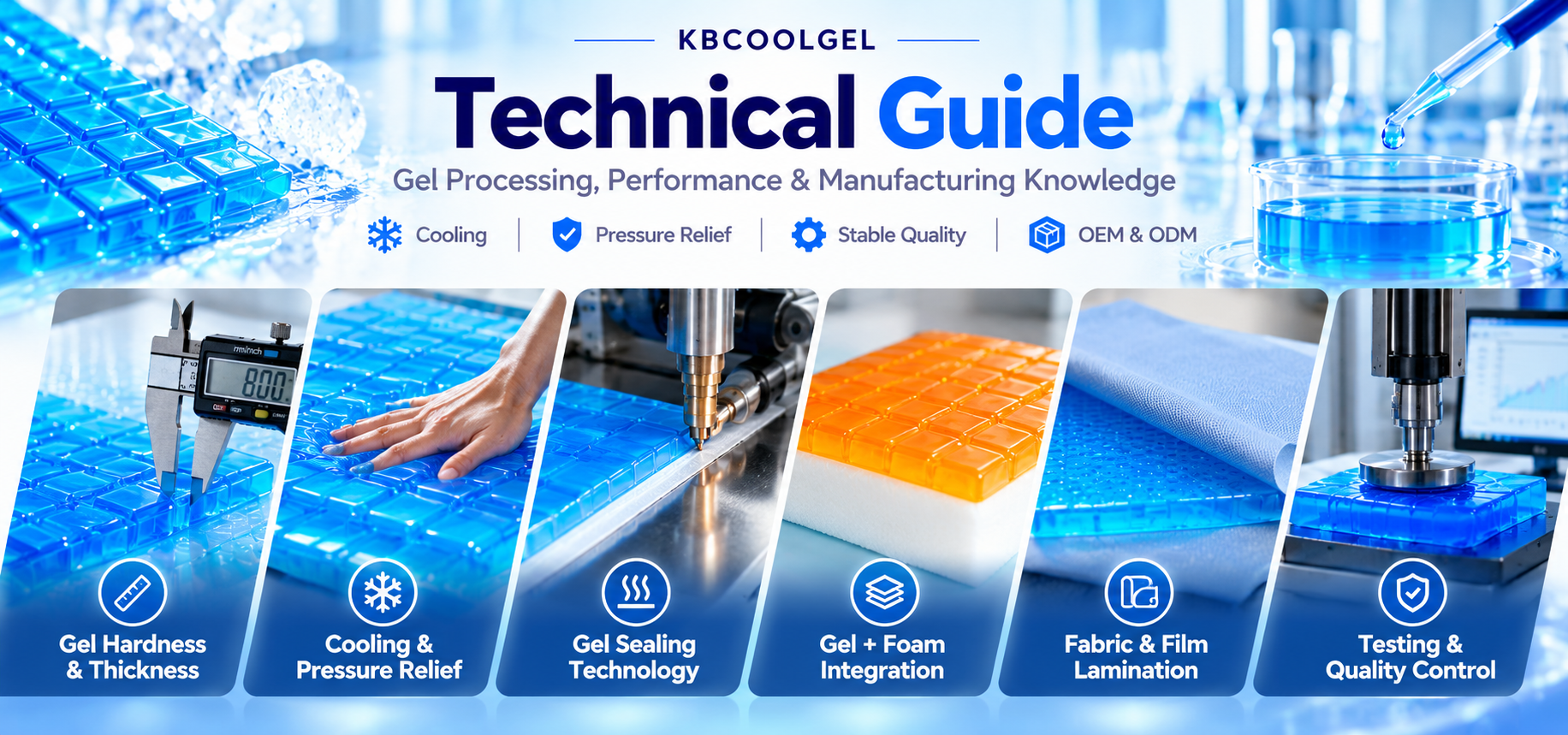
Kunbao has specialized in gel material manufacturing since 2011.
We supply semi-finished gel sheets and customized gel inserts for memory foam pillow manufacturers, latex pillow factories, pillow cover manufacturers, and OEM bedding brands.
Our capabilities include:
More than 15 years of gel manufacturing experience
More than ten gel formulations
Different raw material grades
PU gel and hydrogel options
Custom gel hardness and thickness
Custom sizes, shapes, colors, and surface patterns
More than 400 existing molds
Fabric-backed and film-laminated gel sheets
Customized finished gel inserts
Gel and foam composite development
Free mold development for eligible OEM projects
Sample development and mass production support
Different pillow manufacturers have different safety, comfort, and manufacturing requirements.
We help customers select suitable gel material structures and review available documentation according to their intended applications.
Cooling gel pillows can be designed for safe use, but safety depends on the specific materials, construction, manufacturing quality, and intended use. Relevant documentation and testing should be reviewed.
Toxicity cannot be determined from the term "cooling gel" alone. Manufacturers should evaluate the actual formulation, potential exposure, and applicable chemical safety requirements.
PU gel can be used in pillow applications when the selected formulation and finished product design meet the relevant requirements. Material-specific documentation should be reviewed.
Hydrogel may be used in suitable pillow designs, but its formulation, protective structure, moisture retention, and intended exposure conditions should be evaluated.
Individual sensitivities can vary. Products should not be described as hypoallergenic without suitable evidence.
No. They address different regulatory or testing concerns and do not automatically demonstrate skin irritation or sensitization performance.
Stop using the damaged component, avoid contact with exposed material, and follow the manufacturer's safety and replacement instructions.
Yes. Kunbao can provide available relevant material documentation according to the specific gel material and project requirements.
Cooling gel pillows can be developed for safe and comfortable use when appropriate materials, protective structures, manufacturing controls, and testing are applied.
However, safety should never be assumed solely from the terms "cooling gel," "PU gel," or "hydrogel."
For pillow manufacturers, the most important considerations are the actual material formulation, intended exposure, applicable documentation, and finished product quality.
At Kunbao, we manufacture customized cooling gel sheets and inserts for OEM pillow production.
Looking for cooling gel materials with relevant test documentation?
Share your pillow design, target market, required gel specifications, and testing requirements.
Our team can help you evaluate suitable material options and provide available documentation for your project.
REQUEST GEL SAMPLES | DISCUSS YOUR OEM PILLOW PROJECT
Kunbao — Custom Gel Materials & Solutions Manufacturer Since 2011
Website: www.kbcoolgel.com
 Hot News
2026-08-20
2026-09-08
2026-10-06
2026-09-09
2026-10-11
2026-10-05


 EN