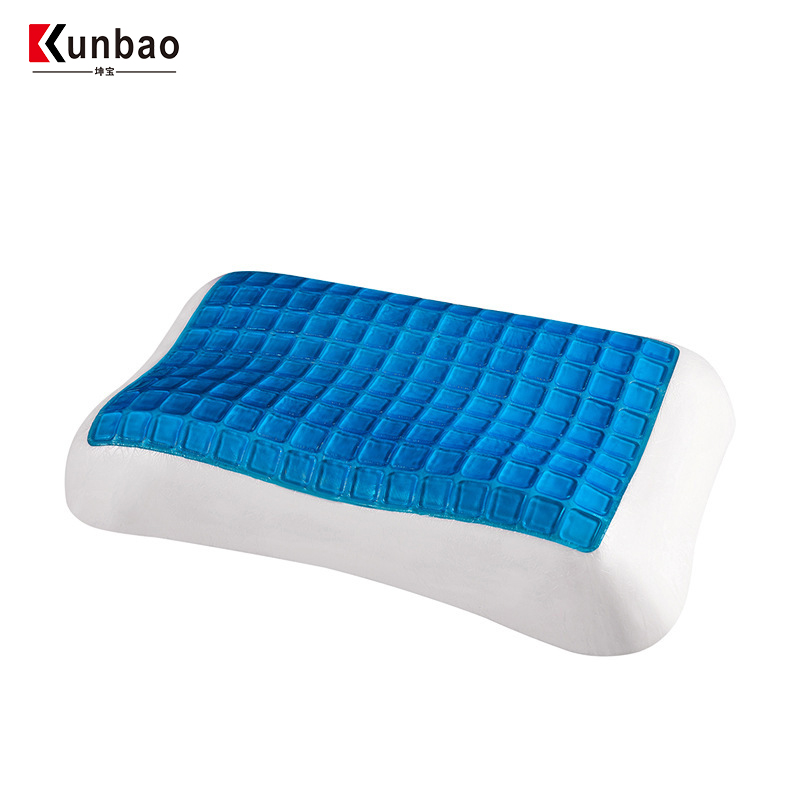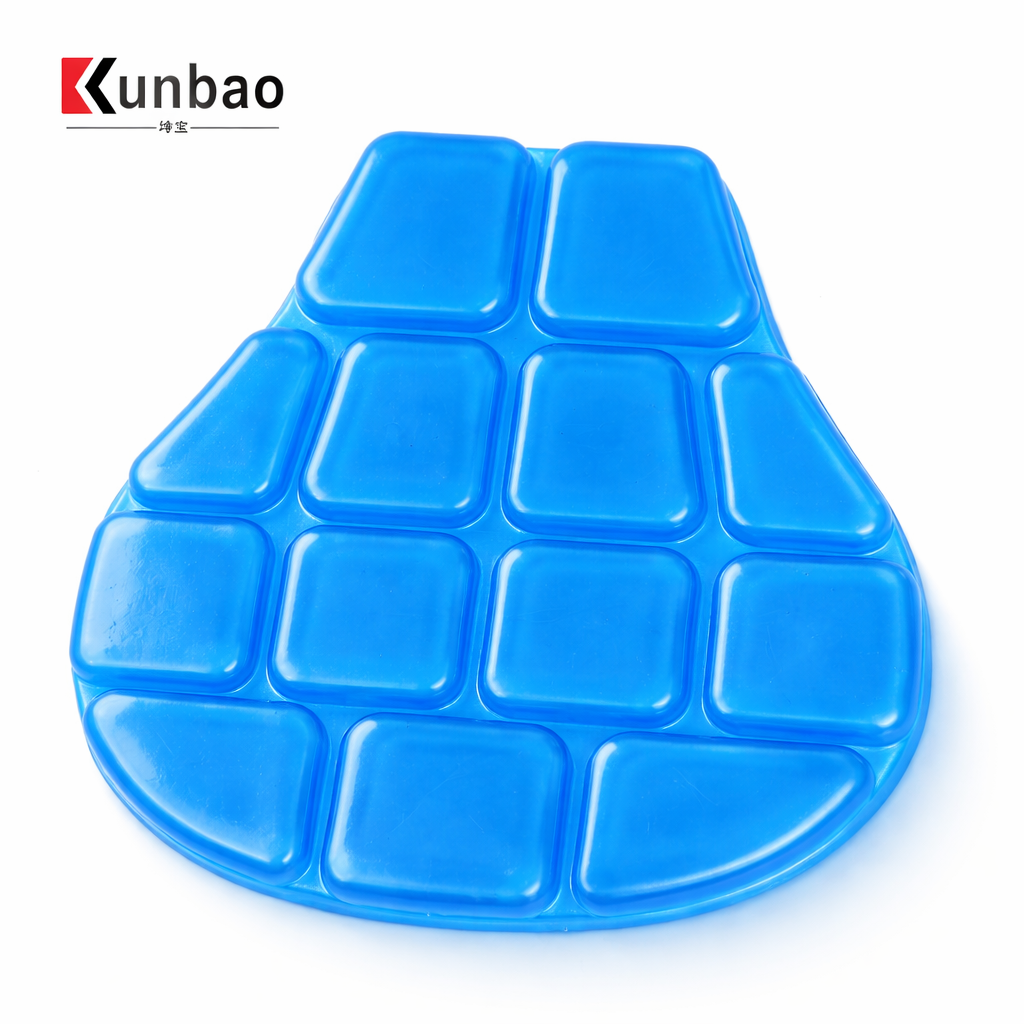
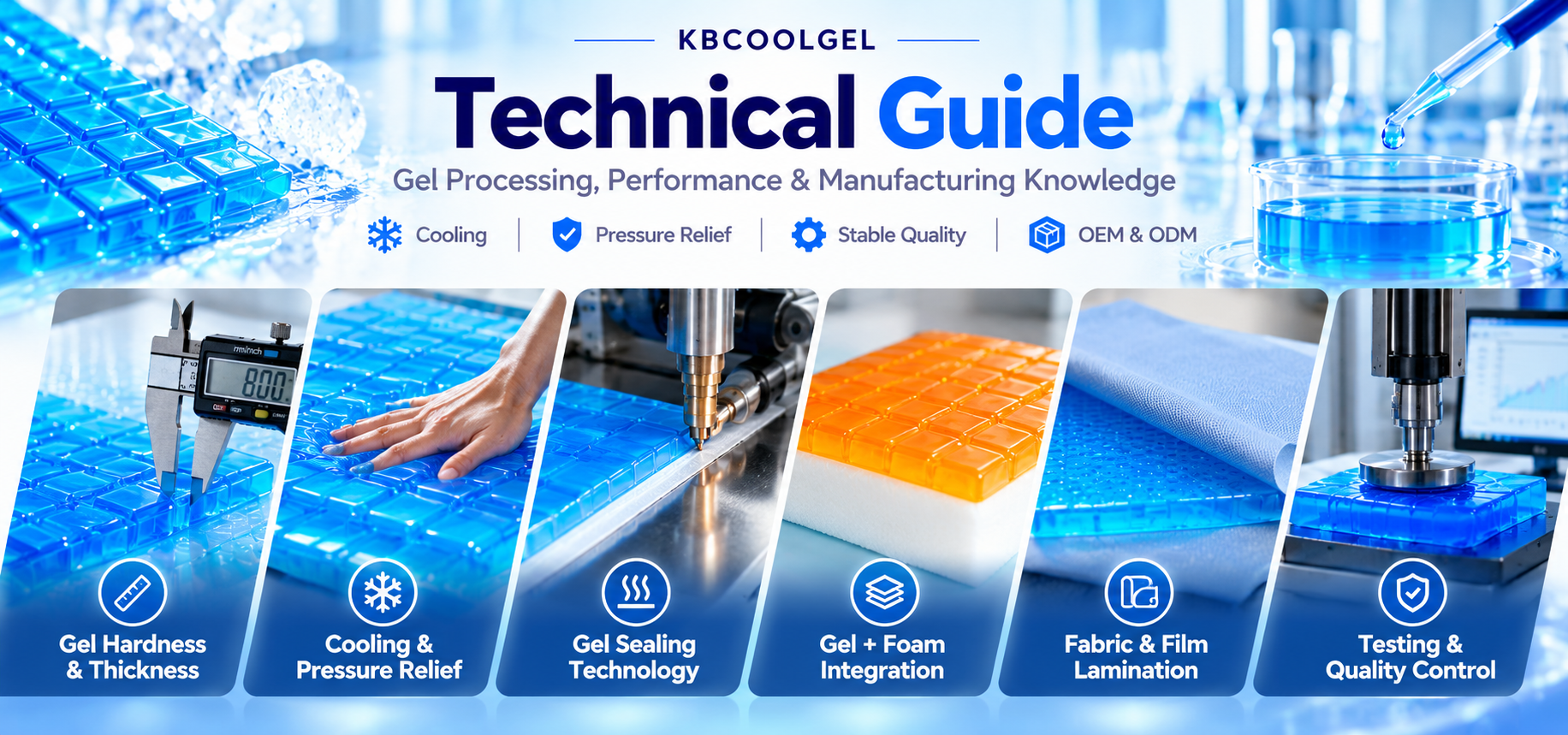
When developing a cooling gel memory foam pillow, choosing the right gel hardness and thickness is just as important as selecting the foam itself.
A gel sheet that is too firm may change the soft feel of the pillow. A gel sheet that is too soft may not provide the desired cushioning response. Likewise, increasing gel thickness does not automatically mean better cooling or greater comfort.
For pillow manufacturers, the ideal gel specification depends on several factors, including the memory foam density and firmness, pillow shape, gel formulation, surface covering, production method, and target price.
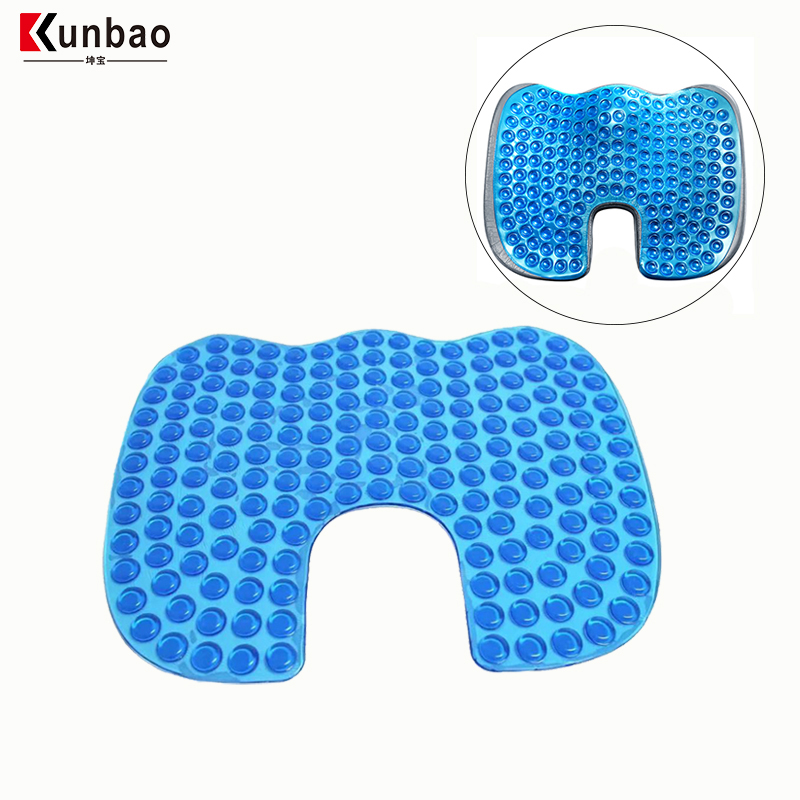
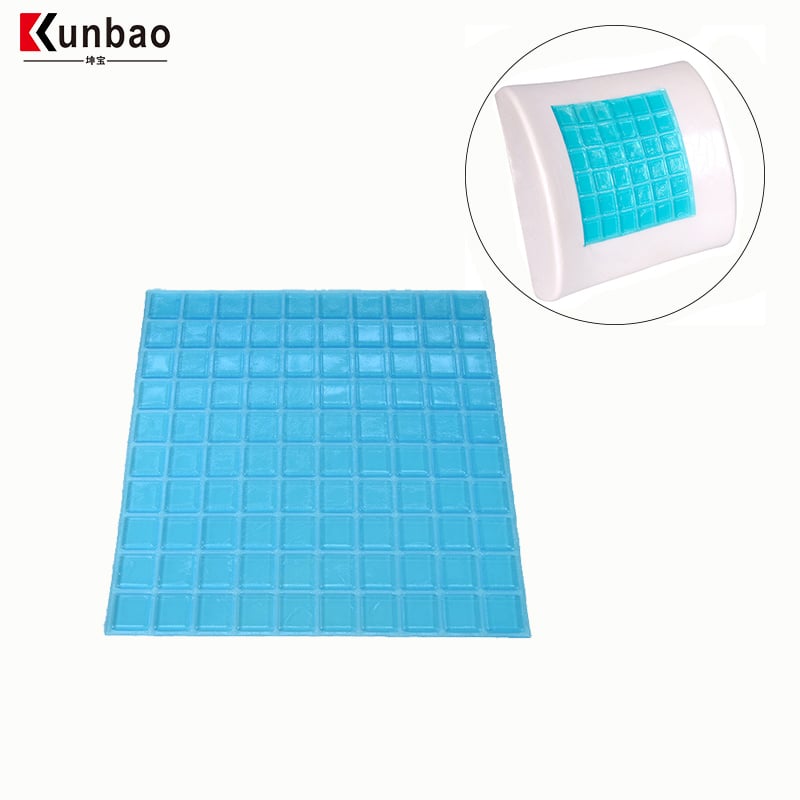
At Kunbao, we manufacture custom PU gel sheets, hydrogel sheets, and gel-foam composite materials for pillow manufacturers.
With manufacturing experience since 2011 and more than ten gel formulations developed for different applications, we help customers select gel materials according to their specific product requirements.
This guide explains how to evaluate gel hardness and thickness when developing cooling memory foam pillows.
Gel hardness affects how the gel responds when pressure is applied.
However, gel hardness should never be considered independently of the foam beneath it.
A soft gel sheet placed on firm memory foam can feel different from the same gel sheet placed on soft, slow-recovery foam.
Softer gel materials may offer:
A gentle, flexible contact feel
Better conformity to curved pillow surfaces
A soft cushioning sensation
Easier integration into selected contoured designs
However, excessive softness may create handling or processing challenges, depending on the gel structure and thickness.
Firmer gel materials may offer:
A more defined cushioning response
Better shape retention in certain structures
Different pressure-distribution characteristics
A firmer surface sensation
However, a gel sheet that is too firm may reduce the plush feel expected from a soft memory foam pillow.
The gel should complement the memory foam rather than overpower its original comfort characteristics.
For this reason, manufacturers should evaluate the finished gel-and-foam structure, not just the gel sheet by itself.
Different memory foam pillow structures may require different gel properties.
For conventional rectangular or gently contoured pillows, manufacturers may prefer a soft and flexible gel formulation that follows the foam surface.
The objective is usually to introduce cooling comfort without significantly changing the original pillow feel.
Contoured pillows have curved surfaces and different support zones.
The gel material should be flexible enough to follow the pillow geometry without excessive wrinkling, bridging, or unwanted tension.
Gel size, thickness, and backing construction should also be considered.
For premium products, manufacturers may prioritize a stronger initial cooling sensation together with a soft surface feel.
In these cases, both gel formulation and surface covering become especially important.
For price-sensitive products, manufacturers may focus on balancing material consumption, acceptable cooling performance, ease of assembly, and production cost.
The most expensive or thickest gel sheet is not necessarily the best option.
Gel thickness is one of the most important specifications in cooling pillow development.
It influences material consumption, cushioning response, flexibility, product weight, and overall manufacturing cost.
Thin gel layers may be suitable when the primary objective is to introduce a cooling contact surface while maintaining the original foam characteristics.
Potential advantages include:
Lower material consumption
Less added weight
Easier integration into certain pillow designs
Smaller changes to the original pillow profile
However, thin layers may provide less additional cushioning and may require more careful handling or suitable backing support.
Medium-thickness gel sheets can provide a balance between cooling contact, flexibility, and additional cushioning.
They may be suitable for manufacturers seeking a more noticeable gel comfort layer without creating an excessively heavy or thick product.
Thicker gel sheets may provide a more pronounced gel cushioning sensation.
However, they also increase material consumption, weight, and cost.
Depending on the formulation and structure, excessive thickness may also affect pillow flexibility and the intended foam support characteristics.
Important: Thicker gel does not automatically provide a proportionally stronger or longer-lasting cooling effect.
Cooling performance should be evaluated through appropriate testing of the complete pillow structure.
Manufacturers often compare different gel thicknesses during product development.
The following table provides general selection considerations rather than universal performance specifications.
| Gel Thickness | General Design Considerations | Potential Applications |
|---|---|---|
| Around 3 mm | Relatively thin profile, lower material consumption, limited additional cushioning | Selected surface cooling layers |
| Around 5 mm | Balance of gel presence, flexibility, and material usage | General cooling gel pillow development |
| Around 10 mm | More substantial gel layer, increased weight and material cost | Selected premium cushioning designs |
These are examples for product evaluation, not fixed recommendations.
The practical minimum thickness also depends on the gel material and manufacturing process.
For example, some molded hydrogel structures may require a minimum thickness of approximately 3 mm, while other gel materials or production methods may have different limitations.
Manufacturers should confirm the feasible thickness range with the supplier before finalizing their designs.
Yes. PU gel and hydrogel have different material structures and performance characteristics.
PU gel can be formulated for different softness, elasticity, and cushioning requirements.
It is suitable for various gel-foam composite applications, subject to process compatibility.
When selecting PU gel thickness, manufacturers should consider:
Required cushioning feel
Foam surface geometry
Material flexibility
Adhesive or molding compatibility
Finished pillow weight and cost
Hydrogel contains water and may offer a stronger initial cooling sensation than certain conventional PU gel formulations.
However, hydrogel selection also requires consideration of:
Moisture retention
Surface protection
Material stability
Temperature exposure
Packaging and storage conditions
Manufacturing thickness limitations
For pillow manufacturers, hydrogel should be evaluated as a complete material system, including its protective film, backing layer, and edge structure where applicable.
The right material and thickness depend on the intended pillow construction, not cooling sensation alone.
Memory foam is an important part of the finished pillow's performance.
Even when the gel material remains unchanged, the finished pillow can feel different depending on the underlying foam.
A softer foam base may require careful selection of gel hardness and thickness to maintain a balanced surface feel.
A firmer foam base may be combined with a softer gel layer to create a different contact sensation.
Curved or irregular foam surfaces may require customized gel shapes, flexible formulations, or suitable backing materials.
Foam density, firmness, and recovery behavior are different properties.
Manufacturers should evaluate them separately rather than assuming that higher-density foam is always firmer.
The most reliable approach is to test gel samples on the actual foam used in production.
Yes, but not in a simple linear way.
The cooling sensation of a gel pillow depends on how heat transfers between the user's skin, pillow cover, gel layer, and surrounding materials.
Important factors include:
Gel thermal properties
Initial material temperature
Gel thickness
Contact area
Pillow cover fabric
Foam structure
Ambient temperature
Duration of contact
A thicker gel sheet may have different thermal behavior from a thinner sheet, but the actual result depends on the complete construction.
For manufacturers developing cooling pillows, it is important to distinguish between:
Initial Cooling Sensation: How cool the pillow feels when first touched.
Cooling Performance Over Time: How the temperature and cooling sensation change during continued contact.
These characteristics should be evaluated separately using consistent test conditions.
The intended production process also affects material selection.
For compatible foam molding processes, gel inserts can be positioned inside the mold before foam production.
Gel hardness, thickness, surface properties, and temperature resistance must be compatible with the manufacturing process.
When gel sheets are bonded directly to foam, manufacturers should evaluate:
Adhesive compatibility
Surface tackiness
Gel flexibility
Bonding strength
Edge stability
Long-term adhesion
The selected gel thickness should also be suitable for the pillow's surface curvature.
For gel materials integrated into pillow covers, the backing fabric and gel flexibility are important.
The composite should be evaluated for sewing compatibility, bending, handling, and durability.
For gel inserts assembled into pillow covers, manufacturers should consider total insert thickness, protective layers, edge finishing, and fit.
Before confirming bulk production, manufacturers should compare gel materials using their actual pillow structure.
We recommend the following development process.
Confirm whether the priority is:
Stronger initial cooling sensation
Softer contact comfort
Additional cushioning
Lower material cost
Premium product differentiation
Compatibility with existing manufacturing equipment
Compare different gel materials based on the required softness, cooling characteristics, flexibility, and manufacturing process.
Select two or three feasible thicknesses for initial evaluation.
Install the gel sheets using the intended production method and the actual foam and cover materials.
Check:
Surface comfort
Cooling sensation
Gel-to-foam compatibility
Bonding or assembly quality
Shape conformity
Material stability
Finished product weight
Production cost
Where necessary, conduct additional thermal, durability, compression, or chemical compliance testing.
After sample approval, record the agreed gel formulation, hardness, thickness, dimensions, backing materials, tolerances, and inspection requirements before mass production.
Kunbao is a custom gel material manufacturer serving pillow factories and other OEM customers.
We understand that different pillow manufacturers have different requirements.
Some customers need soft PU gel sheets for memory foam pillows. Others are developing cooling products with stronger initial cooling characteristics or customized gel composite structures.
Our capabilities include:
More than ten gel formulations
Custom gel hardness and elasticity
Custom thickness, size, and shape
Different raw material grades
PU gel and hydrogel options
Custom gel surface patterns
Fabric-backed and film-laminated gel sheets
Gel + foam composite development
More than 400 existing molds
Free mold development for eligible OEM projects
Sample development and mass production support
Instead of recommending the same gel material for every pillow, we work with customers to identify suitable options according to their product designs and manufacturing requirements.
There is no universal best thickness. The suitable specification depends on the gel formulation, foam firmness, pillow structure, manufacturing process, and desired comfort characteristics.
No. Softer gel may provide a more flexible contact feel, but the ideal hardness depends on the foam structure and overall product design.
Not necessarily. Cooling behavior depends on the gel's thermal properties, thickness, contact conditions, and complete pillow construction. Comparative testing is recommended.
Yes. Kunbao offers different gel formulations and can customize hardness according to project requirements.
Yes. Pillow manufacturers can request suitable gel samples to compare different formulations and thicknesses before confirming mass production.
Choosing gel hardness and thickness is not simply a matter of selecting a number.
The best results come from evaluating the gel material together with the memory foam, pillow cover, manufacturing process, and target market.
At Kunbao, we help pillow manufacturers develop customized gel materials for different cooling and comfort requirements.
Developing a new cooling gel memory foam pillow?
Share your pillow dimensions, foam structure, preferred gel thickness, desired softness, and target application.
Our team can help you evaluate suitable gel formulations and sample options.
Request Custom Gel Samples | Discuss Your OEM Pillow Project
Kunbao — Custom Gel Materials & Solutions Manufacturer Since 2011
Website: www.kbcoolgel.comhttps://www.kbcoolgel.com/our-story/
 Hot News
2026-08-20
2026-09-08
2026-10-06
2026-09-09
2026-10-11
2026-10-05


 EN