Understanding Cooling Duration, PU Gel vs. Hydrogel, and What Affects Long-Lasting Comfort
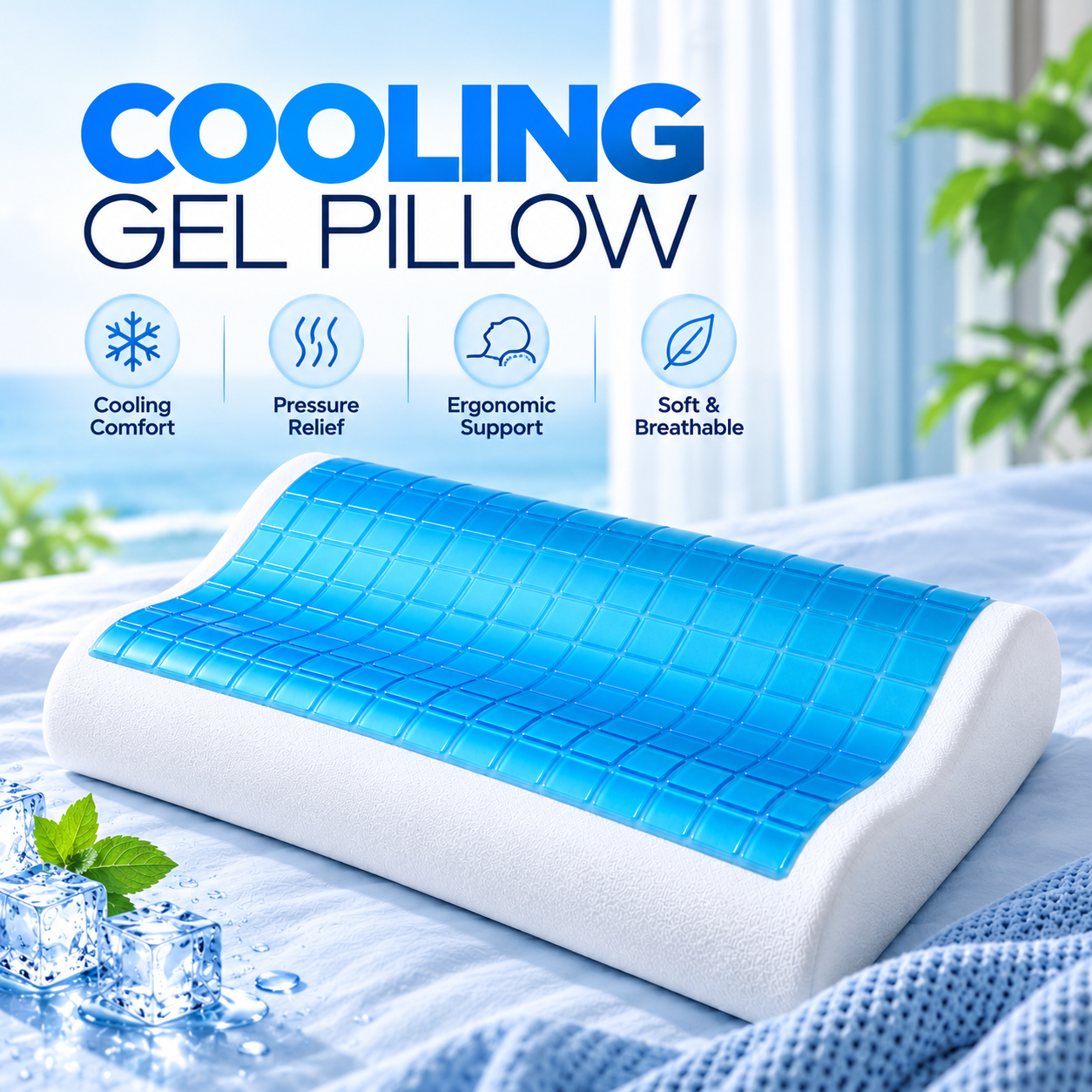
Cooling gel pillows are designed to provide a refreshing sleeping experience, especially for people who prefer a cooler pillow surface.
However, one of the most common questions is:
How long does a cooling gel pillow actually stay cool?
Does it stay cool for 30 minutes, several hours, or throughout the night?
The answer depends on the gel material, pillow construction, room temperature, and how the pillow is used.
Most conventional cooling gel pillows use passive cooling technology. They do not generate cold air or actively refrigerate the pillow. Instead, they transfer heat from the warmer body to the cooler pillow materials.
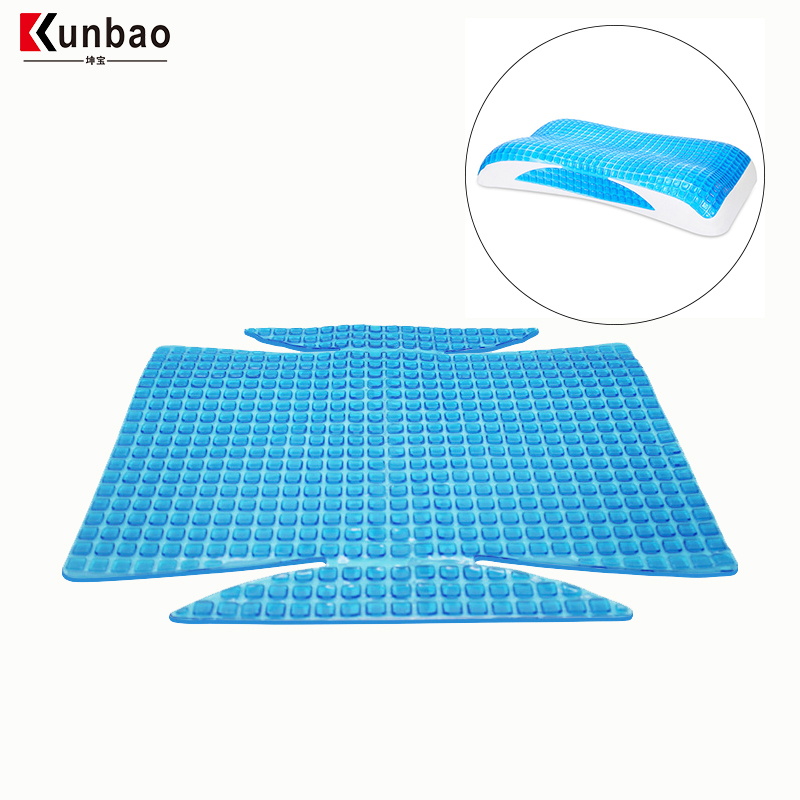
At Kunbao, we manufacture customizable PU gel sheets, hydrogel sheets, and gel inserts for pillow manufacturers.
In this article, we explain how long cooling gel pillows may feel cool, what affects cooling performance, and how manufacturers can select suitable gel materials for their products.
There is no universal cooling duration for all gel pillows.
Some cooling gel pillows provide a noticeable cooling sensation when the head first touches the surface. This sensation may gradually decrease as the gel absorbs heat and approaches the temperature of the surrounding environment.
The actual duration varies according to:
Gel formulation
Thermal properties of the gel
Gel thickness and contact area
Initial gel temperature
Room temperature
Pillow cover material
Memory foam structure
Body heat and contact pressure
Air circulation
Duration of continuous contact
For this reason, manufacturers should avoid describing all cooling gel pillows as products that remain cold for a fixed number of hours.
A cooling gel pillow may feel cool initially, but that does not mean its surface will remain at the same temperature throughout the night.
The cooling duration should be evaluated under defined test conditions.
Cooling gel pillows work primarily through heat transfer.
When a person's head contacts the pillow, the skin is usually warmer than the pillow surface.
Heat naturally moves from the warmer skin toward the cooler materials.
Certain gel formulations can transfer or absorb heat differently from conventional foam surfaces, creating a noticeable cool-touch sensation.
Stage 1: Initial Contact
When the head first touches the pillow, the temperature difference between the skin and gel creates an initial cooling sensation.
Stage 2: Heat Absorption and Transfer
The gel absorbs and redistributes heat according to its thermal properties and the surrounding pillow construction.
Stage 3: Temperature Equalization
As the gel becomes warmer, the temperature difference decreases.
The cooling sensation may gradually become less noticeable.
Stage 4: Cooling Recovery
After the head moves away, the gel may release accumulated heat to the surrounding environment and gradually return toward room temperature.
The recovery rate depends on the gel material, pillow structure, airflow, and ambient conditions.
This is why a gel pillow may feel cooler again after it has been left unused for some time.
A conventional passive cooling gel pillow should not be expected to maintain a constant cold temperature throughout the night.
It does not contain a refrigeration system.
As heat transfers from the body to the pillow, the gel and surrounding materials gradually warm up.
However, the cooling experience can vary considerably between different products.
A pillow's overall thermal comfort depends on more than the gel alone.
Factors such as breathable pillow covers, foam construction, airflow, and bedroom temperature can also influence how warm or cool the pillow feels during use.
For manufacturers, long-lasting cooling should be supported by defined measurements rather than marketing language alone.
It may refer to:
A lower surface temperature during a specified test period
A slower temperature increase under controlled contact conditions
A measurable difference compared with a reference pillow
A favorable cooling sensation reported during a defined user evaluation
These are different performance characteristics and should not be treated as interchangeable.
PU gel and hydrogel are two materials that can be used in cooling pillow applications.
Their thermal behavior and practical manufacturing requirements are different.
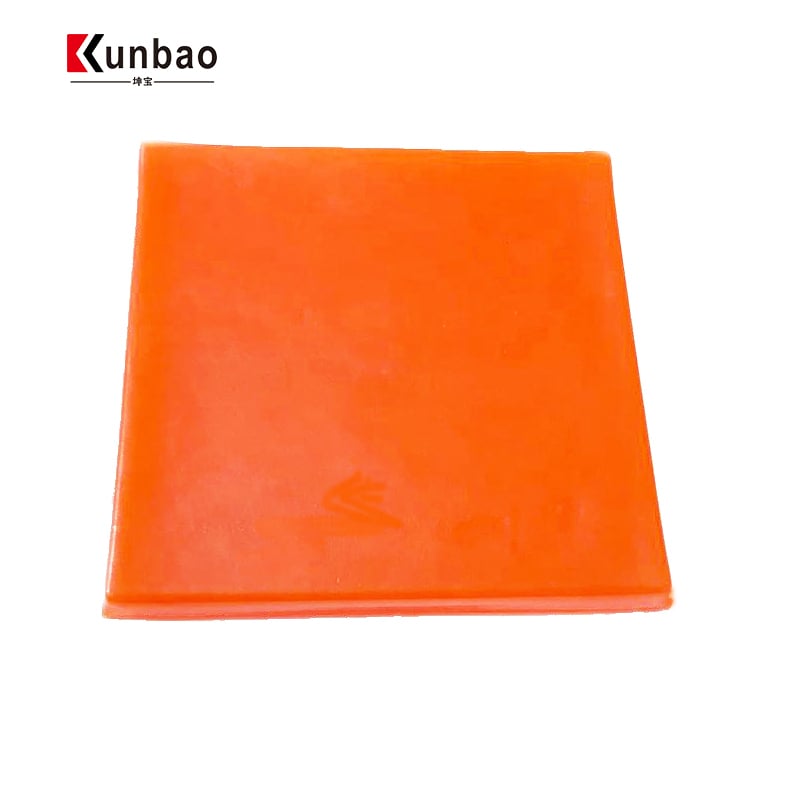
PU gel is a flexible polyurethane-based material commonly used in cushioning and comfort products.
Depending on the formulation, PU gel can provide:
Soft cushioning
Flexible gel sheet structures
Different hardness levels
Customizable thickness
Cooling contact characteristics
Compatibility with selected foam composite processes
Different PU gel formulations may have different thermal properties.
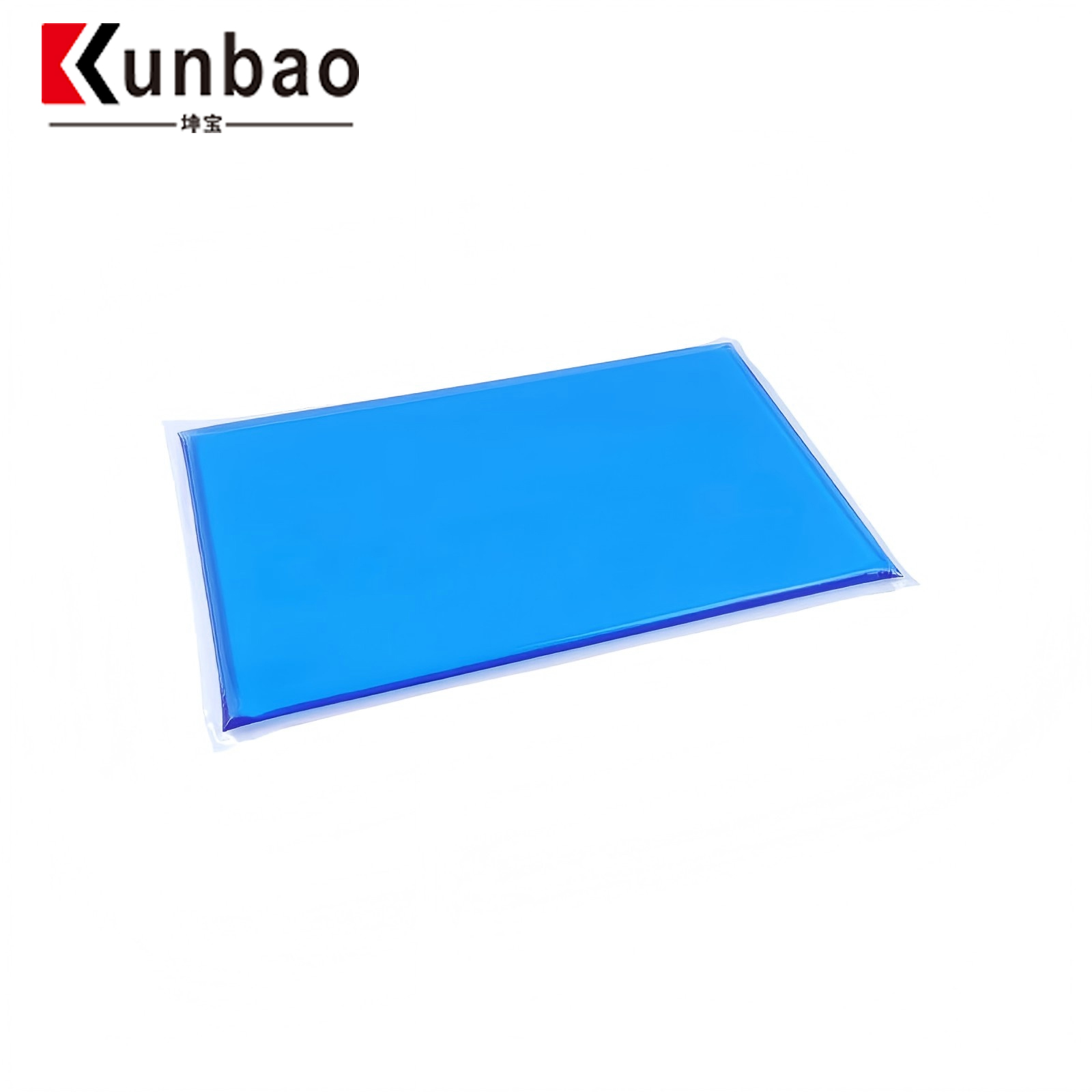
Hydrogel is a water-containing polymer gel.
Because water plays an important role in its thermal behavior, certain hydrogel formulations can provide a stronger initial cooling sensation than conventional PU gel formulations.
Potential characteristics include:
Noticeable initial cool-touch sensation
Flexible gel structures
Different cushioning characteristics
Customizable surface patterns
Options for selected cooling pillow applications
However, hydrogel also requires careful evaluation of moisture retention, protective films, storage conditions, and long-term material stability.
It is not possible to determine cooling duration from the material name alone.
A particular hydrogel formulation may feel cooler initially than a particular PU gel formulation, but this does not automatically prove that it will remain cooler for a longer period.
The actual result depends on the thermal properties, thickness, contact conditions, and complete pillow construction.
For pillow manufacturers, the most reliable approach is to compare PU gel and hydrogel samples under the same test conditions.
Gel thickness can affect the thermal behavior of a cooling pillow, but thicker gel does not automatically mean better cooling.
A thicker gel layer contains more material and may change the amount of heat the structure can absorb.
However, cooling performance also depends on the gel's thermal conductivity, heat capacity, surface contact, and surrounding materials.
Thin gel sheets may be suitable for manufacturers seeking:
A relatively low-profile cooling surface
Lower material consumption
Reduced additional weight
Easier integration into selected pillow structures
Medium-thickness gel sheets may offer a balance between cooling contact, flexibility, cushioning, and material usage.
Thicker gel sheets may provide additional cushioning and different thermal behavior.
However, they also increase material consumption, finished product weight, and cost.
The most suitable thickness depends on the pillow design and target performance.
Manufacturers should compare different thicknesses using the same gel formulation and finished pillow structure.
The pillow cover is one of the most important factors affecting the user's cooling experience.
Even if the gel material has favorable thermal properties, a thick or highly insulating fabric may reduce the cooling sensation reaching the skin.
Selected thin or breathable fabrics may allow a more noticeable cooling sensation, depending on their construction.
Certain cooling-touch fabrics are designed to provide a cool initial contact sensation.
When combined with suitable gel materials, they may help manufacturers develop differentiated cooling pillow products.
Thicker fabrics or additional padding layers can change heat transfer between the head and the gel.
This may reduce the immediate cool-touch sensation.
Some pillow designs feature a visible gel surface, while others incorporate gel beneath a fabric layer.
These structures can feel different even when the same gel material is used.
Manufacturers should test cooling performance with the actual pillow cover, not only the uncovered gel sheet.
Yes.
The memory foam beneath the gel can influence the thermal behavior of the finished pillow.
Memory foam structure, density, airflow, and the position of the gel layer all affect the complete product.
For example, a gel sheet placed directly beneath a thin pillow cover may produce a different initial cooling sensation from the same gel sheet positioned deeper inside the foam.
Similarly, foam ventilation channels and cover construction may influence heat dissipation.
For this reason, a cooling gel sheet that performs well as an individual material does not necessarily produce identical results in every pillow design.
The complete pillow should be evaluated.
For OEM pillow manufacturers, cooling performance should be evaluated using consistent and repeatable test conditions.
A practical comparison may include the following steps.
Select the gel materials or pillow structures to be compared.
For example:
Conventional PU gel sheet
Hydrogel sheet
Regular memory foam pillow without gel
Keep the samples under comparable conditions, including:
Room temperature
Humidity
Initial sample temperature
Pillow cover material
Contact area
Use an appropriate controlled test method to simulate contact with a warmer surface.
The heat source, contact pressure, and duration should remain consistent across samples.
Measure relevant temperatures at defined intervals.
For example, the test can record the initial surface temperature and its changes during continued contact.
The measurement method and sensor position should be documented.
Evaluate:
Initial cooling response
Temperature change over time
Differences between gel formulations
Effects of thickness
Effects of pillow cover materials
Temperature recovery after contact
Where available, standardized or laboratory-defined thermal testing methods should be used.
The final pillow construction should be tested separately.
Results obtained from an individual gel sheet should not automatically be presented as performance results for the complete pillow.
Manufacturers can evaluate several design options when developing cooling pillows.
Different gel formulations have different thermal and mechanical properties.
Choosing a suitable formulation is an important starting point.
The gel layer should balance cooling performance, flexibility, cushioning, weight, and cost.
Fabric selection can influence the cooling sensation reaching the user.
Positioning the gel closer to the contact surface may affect the initial cooling sensation, depending on the pillow design.
Breathable foam structures and appropriate cover designs may influence heat dissipation.
The best solution should be determined through comparison of actual pillow samples.
No single design adjustment guarantees a specific cooling duration.
Before purchasing cooling gel sheets for a new pillow project, manufacturers should confirm several important questions.
1. What gel formulations are available?
Different formulations may offer different cooling and cushioning characteristics.
2. Can gel hardness and thickness be customized?
The gel should match the pillow's intended comfort and manufacturing requirements.
3. Are comparative cooling test reports available?
Ask for the test method, conditions, sample descriptions, and measured results.
4. What backing materials are available?
Options may include release paper, protective film, fabric backing, or finished gel insert structures.
5. Can the supplier provide samples for comparison?
Testing different gel materials in the actual pillow structure is important.
6. What material documentation is available?
Confirm the applicable reports for the exact material formulation.
7. Can the supplier support repeat production?
Consistent formulation, dimensions, and quality requirements are important for bulk manufacturing.
Kunbao is a custom gel material manufacturer serving pillow factories, bedding brands, and OEM customers.
Since 2011, we have developed gel materials for cooling, cushioning, and comfort applications.
Our capabilities include:
More than 15 years of gel manufacturing experience
More than ten gel formulations
PU gel and hydrogel options
Different raw material grades
Custom gel hardness and thickness
Custom gel size, shape, color, and patterns
More than 400 existing molds
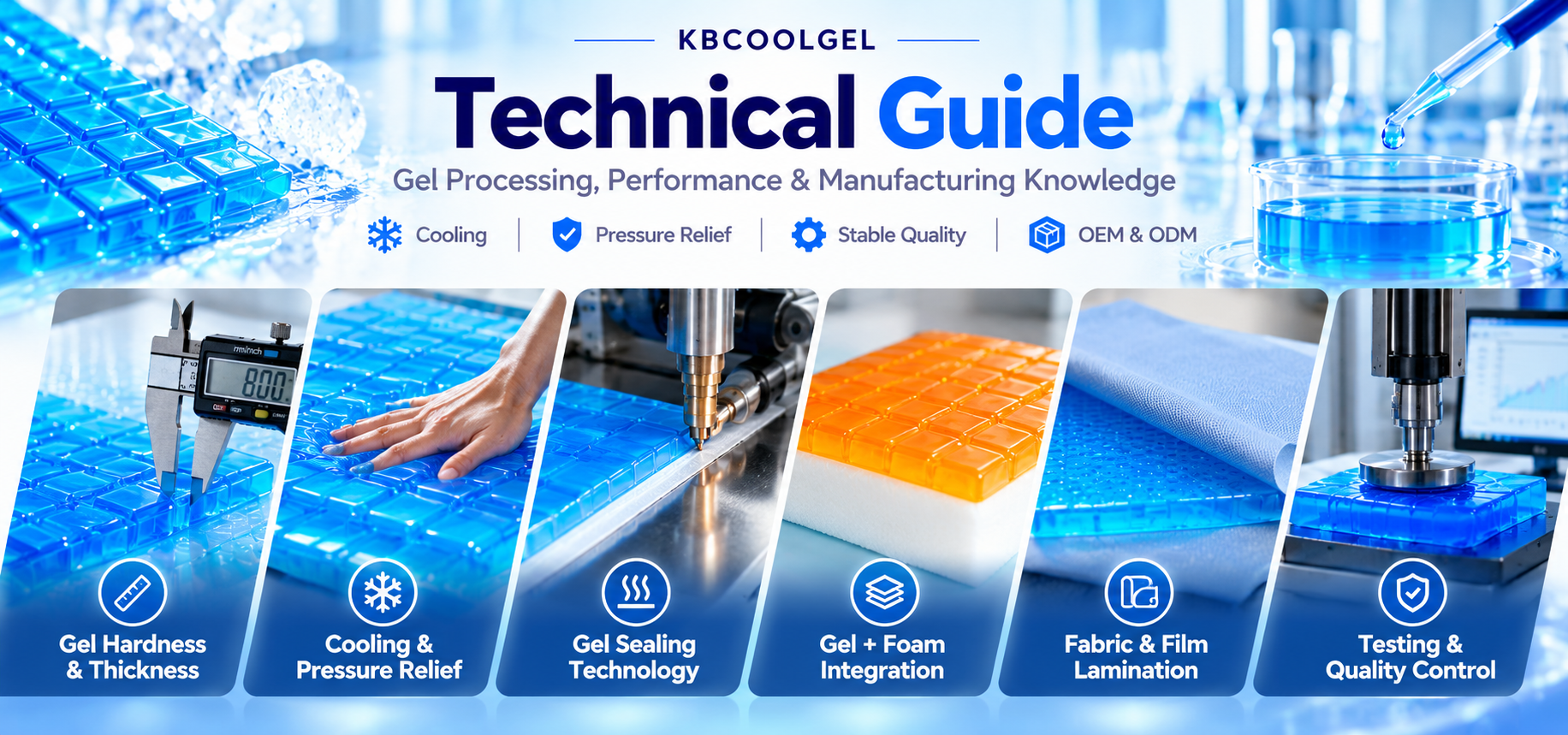
Fabric-backed and film-laminated gel sheets
Custom finished gel inserts
Gel and foam composite development
Free mold development for eligible OEM projects
Sample development and mass production support
We can also provide available material documentation and comparative thermal test information for relevant gel materials.
Rather than recommending the same gel for every pillow, we help manufacturers evaluate suitable options based on their target cooling characteristics, pillow structure, and production requirements.
There is no fixed number of hours that applies to every cooling gel pillow. The duration depends on the gel formulation, pillow construction, room temperature, and contact conditions.
Most passive cooling gel pillows do not maintain a constant cold temperature throughout the night. Their cooling sensation may decrease as the materials warm up.
Not necessarily. Certain hydrogel formulations may provide stronger initial cooling, but cooling duration must be compared under the same test conditions.
Not always. Thickness can affect thermal behavior, but the actual result depends on the gel formulation and complete pillow construction.
After the pillow is no longer in contact with the body, the gel may gradually return toward room temperature. How quickly this occurs depends on the material and environmental conditions.
Yes. Kunbao offers different gel formulations, thicknesses, hardness levels, and backing structures for customized pillow development.
The cooling duration of a gel pillow depends on more than the gel material alone.
Gel formulation, thickness, cover fabric, foam construction, and test conditions all influence the finished product.
For pillow manufacturers, the goal should be to select a suitable material and validate its performance rather than rely on unsupported cooling-duration claims.
At Kunbao, we manufacture customized PU gel sheets, hydrogel sheets, and gel inserts for OEM pillow production.
Developing a new cooling gel pillow or looking to improve an existing product?
Send us your pillow structure, required gel dimensions, preferred thickness, and target cooling requirements.
Our team can help you evaluate suitable gel materials and sample options.
REQUEST COOLING GEL SAMPLES | DISCUSS YOUR OEM PILLOW PROJECT
Kunbao — Custom Gel Materials & Solutions Manufacturer Since 2011
Website: www.kbcoolgel.com
 Hot News
2026-08-20
2026-09-08
2026-10-06
2026-09-09
2026-10-11
2026-10-05


 EN